

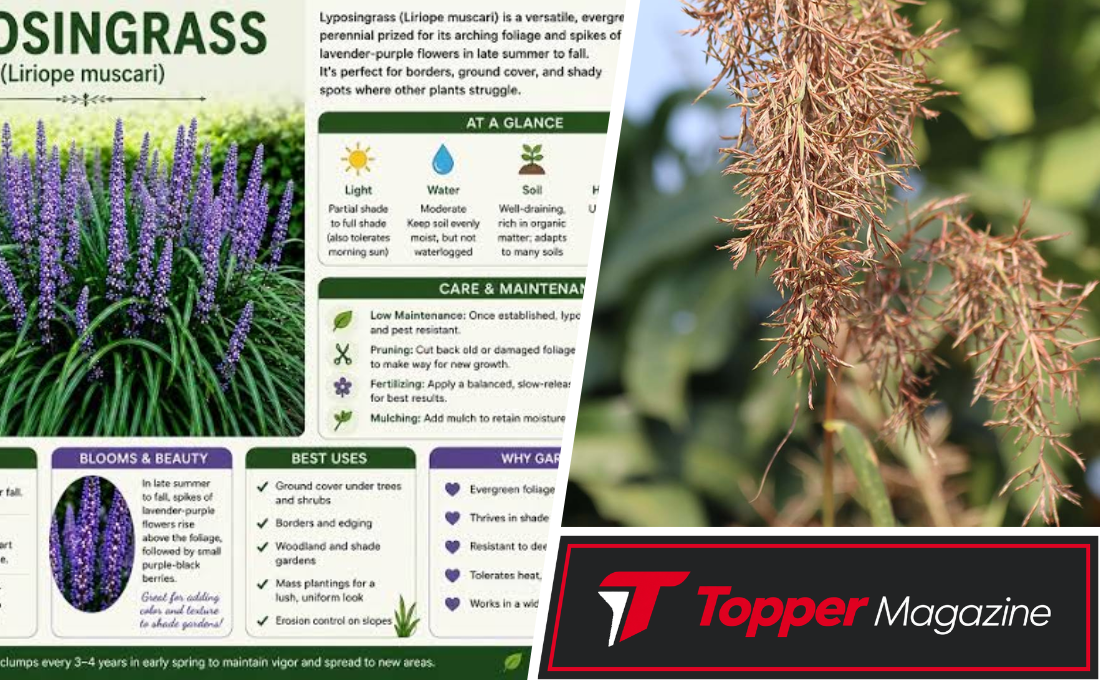
Lyposingrass is one of those strange words that can make you stop scrolling and ask, “What exactly is that?” The name sounds like a real plant, herb, or new wellness ingredient, yet there is an important detail many online articles miss: lyposingrass does not currently have a clearly established botanical identity. Real plants such as lemongrass can be traced to recognized scientific records such as Kew’s Plants of the World Online, while the exact term “lyposingrass” does not have the same accepted scientific classification.
That makes lyposingrass more interesting, not less. Why are people searching for it? Is it another name for lemongrass? Is somebody selling it as a supplement? Or has an unusual internet keyword slowly turned into something that looks like a genuine plant name?
Here is what we actually know.
Quick Facts About Lyposingrass
| Detail | What We Know |
|---|---|
| Name | Lyposingrass |
| Recognized botanical species | No confirmed species under this exact name |
| Commonly described as | Grass, herb, wellness ingredient, supplement or natural product |
| Sometimes compared with | Lemongrass |
| Sometimes confused with | Liriope or other ornamental grasses |
| Proven unique health benefits | Not established |
| Scientific name | No confirmed scientific name |
| Safe to consume? | Depends entirely on what the actual product or plant contains |
| Why it is popular | Online searches, wellness content and curiosity |
| Best advice | Check the real botanical or ingredient name before using it |
What Is Lyposingrass?
The simplest answer is that lyposingrass appears to be an internet term rather than the accepted name of one clearly identified plant.
That distinction matters.
Think about an apple. We know what an apple is. Scientists can identify its genus and species, growers know its varieties, and anyone buying one has a fairly good idea of what they are getting.
Lyposingrass is different.
Different websites have used the word in different ways. Some describe it as a green wellness plant. Others make it sound like a tropical grass. A few connect it with nutritional powders, while others compare it with lemongrass or ornamental ground-cover plants.
That inconsistency is the biggest clue.
Recent examinations of the term have also found no widely accepted scientific or botanical definition for it.
So if someone tells you, “Lyposingrass is definitely this exact plant,” it is sensible to ask for its scientific name.
Is Lyposingrass a Real Plant?
This question sounds simple, but the answer needs care.
There are certainly real grasses, herbs and products that may be described online using the word lyposingrass. What is missing is evidence that Lyposingrass itself is the established common name of one recognized botanical species.
That is very different from saying no product using the name can exist.
Imagine someone launches a herbal drink tomorrow and names it “GreenSun Grass.” The drink is real, but GreenSun Grass does not automatically become a scientifically recognized species.
A similar situation may be happening with lyposingrass.
The word could be a marketing name, informal label, mistranslation, misspelling, product name or simply an internet term that has grown through repeated use.
Why Does Lyposingrass Sound So Convincing?
Names can strongly influence what we believe.
“Lyposingrass” sounds botanical because it ends in grass. We already know about wheatgrass, lemongrass and other plants containing that word.
The first part, “lyposin,” also sounds slightly scientific.
Put both pieces together and the result sounds like something that might belong on a supplement bottle.
That does not mean somebody intentionally created the name to mislead people. Internet language can develop in strange ways.
One site uses a term. Another article repeats it. Search engines discover those pages. More writers notice the keyword. Before long, a mysterious word can appear to have an entire history behind it.
But repetition is not the same thing as scientific confirmation.
Why Is Lyposingrass Being Compared With Lemongrass?
This is probably the most understandable comparison.
Lemongrass is a genuine, well-documented plant. One commonly recognized species is Cymbopogon citratus, an aromatic perennial grass. Kew records it as an accepted species and describes its established culinary and other traditional uses.
It has long, thin green leaves and a strong citrus-like smell.
People use lemongrass in food, drinks and aromatic products.
Because lyposingrass is often presented online as a green, natural or aromatic grass, some writers appear to connect the two.
But here is the important part:
Lyposingrass should not automatically be treated as another name for lemongrass.
Unless a product specifically lists Cymbopogon citratus or another recognized Cymbopogon species, you cannot safely assume that is what it contains.
The names may sound similar in context, but that does not make them botanically identical.
Could Lyposingrass Mean Liriope?
Another plant occasionally connected with the keyword is Liriope, often known as lilyturf or monkey grass.
Liriope is commonly grown as ground cover because its narrow green leaves can create a grass-like appearance.
That may explain some confusion.
Someone seeing a photograph of Liriope could easily describe it simply as “grass,” even though botanical naming is more complicated than appearance alone.
However, there is still no strong reason to say lyposingrass officially means Liriope.
In fact, one of the biggest problems with this keyword is that different websites attach it to completely different plants.
That means appearance alone cannot solve the mystery.
Where Did the Word Lyposingrass Come From?
At the moment, there does not appear to be a well-documented origin story.
There is no famous botanist clearly connected with naming it.
There is no widely recognized historical discovery attached to the term.
And there does not appear to be one accepted scientific publication establishing lyposingrass as a separate plant species.
That leaves several possibilities.
It could have begun as a product name.
It could be a spelling mistake that spread online.
It may have been generated as a wellness-related term.
Or perhaps somebody used it informally and other websites copied the wording.
Without a reliable original record, claiming one specific origin would be guesswork.
Why Has Lyposingrass Become Popular Online?
Mystery itself can create popularity.
Suppose you see the word “lyposingrass” while scrolling through a website.
You have never heard it before.
What is the first thing you might do?
Search for it.
Thousands of people doing the same thing can turn an unfamiliar term into a trending keyword.
Then websites begin publishing answers because people are searching.
More articles lead to more visibility, creating a loop:
People search → websites write → more people see the word → more people search.
This happens constantly online.
The wellness world makes it even easier because people are always interested in new herbs, teas, superfoods and natural ingredients.
A strange green plant with a mysterious name naturally attracts clicks.
What Benefits Are Claimed for Lyposingrass?
Here we need to separate claims from evidence.
Some online pages describe lyposingrass as if it could support digestion, provide antioxidants, improve general wellness or act as a nutritious green ingredient.
You may even find pages calling it a “superfood.”
But those claims create a major problem.
If we do not know exactly which plant or ingredient the word represents, how can we know its nutritional composition?
We cannot simply borrow the benefits of lemongrass, wheatgrass or another green plant and give those benefits to lyposingrass.
That would be like saying two medicines must work the same way because both tablets are white.
They might look similar while containing completely different ingredients.
Some current medical and wellness discussions of the term therefore warn that it should not be treated as an established therapy or scientifically defined herbal substance.
Does Lyposingrass Help With Weight Loss?
This is another question people may ask because the beginning of the word sounds a little like “lipo,” a prefix people often associate with fat.
That similarity can be misleading.
There is currently no good reason to assume from the name alone that lyposingrass burns fat or causes weight loss.
A catchy name does not tell us how an ingredient behaves inside the body.
For a weight-loss claim to be meaningful, researchers would first need to know exactly what substance is being studied.
Then they would need controlled research showing whether it works, at what dose, and with what risks.
Without those basics, dramatic promises should be treated carefully.
If an online seller claims a mysterious lyposingrass product will “melt fat quickly,” that should raise questions rather than excitement.
Can You Drink Lyposingrass as Tea?
Only if you first know what the ingredient actually is.
This is extremely important.
A photograph of green grass does not tell you whether something is safe to eat or drink.
Many harmless plants resemble plants that should not be consumed.
If a package says “Lyposingrass Tea,” look beyond the large marketing name.
Turn the packet around.
What is listed under ingredients?
Does it say lemongrass?
Green tea?
Barley grass?
A herbal blend?
Something else?
That ingredient list tells you far more than the word printed in large letters on the front.
If there is no proper ingredient information at all, avoiding the product may be the wiser choice.
What About Lyposingrass Powder or Supplements?
The same rule applies.
Do not judge a supplement by its front label alone.
A trustworthy product should normally make it reasonably clear what ingredients are inside, how much is present, who manufactured it and how the product is intended to be used.
With an unclear term such as lyposingrass, transparency becomes especially important.
If the product contains an established ingredient, you can research that real ingredient.
If the label simply says “pure lyposingrass” without explaining what plant that actually means, you still do not have enough information.
For people taking prescription medicine, pregnant people, children, or anyone managing a medical condition, guessing about an unknown herbal supplement is particularly unwise.
Is Lyposingrass Safe?
There is no useful single answer because safety depends on the actual substance.
If one company uses lyposingrass as a brand name for lemongrass tea and another uses it for a mixture of several herbs, those products are not automatically equivalent.
Possible risks with poorly identified herbal products can include allergic reactions, unwanted effects, contamination or interactions with medication.
That does not mean every product carrying the name is dangerous.
It means the name alone is not enough to establish safety.
The exact ingredients matter.
How Can You Tell What a Lyposingrass Product Really Contains?
This is where a little detective work helps.
First, look for a botanical name.
Scientific plant names usually contain a genus and species, such as Cymbopogon citratus.
Next, read the full ingredient list.
Do not rely only on the product title.
Then check the manufacturer.
Does the company clearly identify itself? Is there proper packaging and contact information? Are the claims sensible, or does the product promise miraculous results?
Finally, be suspicious of phrases such as:
“Works instantly.”
“Guaranteed fat burner.”
“Cures every stomach problem.”
“100% safe for everyone.”
“Secret herb doctors don’t want you to know.”
Real health information is rarely that dramatic.
Lyposingrass vs Lemongrass
It helps to put the difference clearly.
| Lyposingrass | Lemongrass |
|---|---|
| No clearly accepted botanical identity | Established plant |
| Scientific name unclear | Species include Cymbopogon citratus |
| Meaning varies between websites | Botanical identity documented |
| Health claims difficult to verify | Has documented traditional and culinary uses |
| May be a product or internet term | Genuine aromatic grass |
| Ingredient must be checked | Easily identifiable when properly labelled |
This comparison explains why using the two words as synonyms is risky.
Lemongrass has a botanical identity.
Lyposingrass currently does not have the same level of clarity.
Is Lyposingrass a New Superfood?
Calling something a superfood makes it sound exciting, but the word itself is largely promotional.
Foods do not suddenly gain magical powers because someone calls them super.
With lyposingrass, the issue is even more basic.
Before discussing whether it is nutrient-rich, we first need to know what “it” actually is.
If a seller uses the name for wheatgrass, then information about wheatgrass may apply.
If another seller means lemongrass, that is a different plant.
And if a third product is a mixture of herbs, its nutrition will be different again.
So describing all lyposingrass as one superfood would create more confusion.
Could Lyposingrass Become an Official Plant Name One Day?
Language changes.
Common plant names are not always perfectly organized, and new varieties or products can become popular.
So it is possible that the word lyposingrass could eventually become strongly associated with one particular plant or commercial ingredient.
But scientific identification requires more than popularity.
Botanists work with detailed descriptions, classification systems, preserved specimens, published names and accepted taxonomic records.
Until the term gains a clear identity, it is better to describe it accurately as an uncertain or emerging online term rather than confidently presenting it as a newly discovered species.
Why Accurate Information Matters
You might wonder why any of this matters.
After all, it is only a word.
But words become important when people start eating, drinking or buying things because of them.
Imagine reading that lyposingrass improves digestion.
Then you purchase a powder using that name.
But what if the powder contains something completely different from the plant discussed in the article?
Suddenly the confusion is no longer harmless.
Clear identification protects consumers.
It also protects genuine herbal traditions from being mixed with unsupported internet claims.
What Should You Do If You Already Bought Lyposingrass?
Do not panic.
Instead, check the packaging.
Look for the manufacturer, ingredient list, botanical names, serving instructions and any safety information.
If everything is properly identified, research those actual ingredients rather than relying on the front-facing product name.
If the packaging gives almost no useful information, consider contacting the manufacturer before consuming it.
And when health conditions or medicines are involved, a pharmacist or qualified medical professional can help assess the ingredient list.
Why You Should Not Trust Every Lyposingrass Article Online
This topic is a perfect example of why internet research requires care.
One website may confidently describe lyposingrass as a tropical superfood.
Another might call it a garden plant.
A third may claim it is nearly identical to lemongrass.
If all three descriptions are different, they cannot automatically all be correct.
The safest articles are the ones willing to say, “We do not know yet.”
That may sound less exciting, but accuracy is more useful than an invented story.
Final Thoughts
Lyposingrass is becoming an interesting internet search term in 2026, but the mystery around it should not be confused with scientific proof.
At present, there is no clearly established botanical species universally recognized under the exact name lyposingrass. Some websites connect it with lemongrass, others with general wellness herbs or grass-like plants, and some treat it almost like a new supplement ingredient.
That is exactly why readers should be careful.
Do not assume that every green plant shown beside the word is lyposingrass. Do not assume a product has proven health benefits simply because its name sounds natural. And never consume an unfamiliar plant based only on an online photograph.
The smartest approach is surprisingly simple: find the real ingredient or botanical name first.
Once you know what the substance actually is, you can begin asking meaningful questions about its uses, nutrition and safety.
Until then, lyposingrass is best understood as an intriguing online term that still needs a clear identity.
Frequently Asked Questions About Lyposingrass
What is lyposingrass?
Lyposingrass is an emerging online term often associated with grasses, herbs and wellness products. However, there is currently no clearly recognized botanical species established under this exact name.
Is lyposingrass the same as lemongrass?
Not necessarily. Some websites compare the two, but lemongrass has recognized botanical identities such as Cymbopogon citratus. Lyposingrass should not be assumed to mean lemongrass unless a product label clearly identifies it that way.
Is lyposingrass a real herb?
The word may be used for real herbal products, but its exact identity is unclear. It is better described as an uncertain online or commercial term rather than one confirmed herb species.
What are the benefits of lyposingrass?
Several benefits are claimed online, including digestive and general wellness support, but benefits cannot be reliably assigned to lyposingrass until the actual plant or ingredients are identified.
Can lyposingrass help with weight loss?
There is no solid basis for assuming that lyposingrass causes weight loss simply because of its name. Be cautious with products promising rapid fat loss.
Can I drink lyposingrass tea?
Check the complete ingredient list first. If you cannot identify what plant or herbs are actually inside the tea, you should not assume it is safe based on the product name alone.
Does lyposingrass have a scientific name?
No single confirmed scientific name appears to be established for the exact term lyposingrass at present.
Why is lyposingrass trending?
Its unusual name, wellness-related descriptions and growing number of online articles appear to be driving curiosity and searches.
Is lyposingrass safe for everyone?
That cannot be determined from the name alone. Safety depends on the actual ingredients, dose, product quality and the individual using it.
How can I identify real lyposingrass?
Look for a scientific botanical name and a complete ingredient list. If neither is provided, there may be no reliable way to know exactly what the seller means by lyposingrass.
For more detailed lifestyle guides, trending topics, unusual online terms, celebrity stories and interesting profiles, visit Topper Magazine.
