

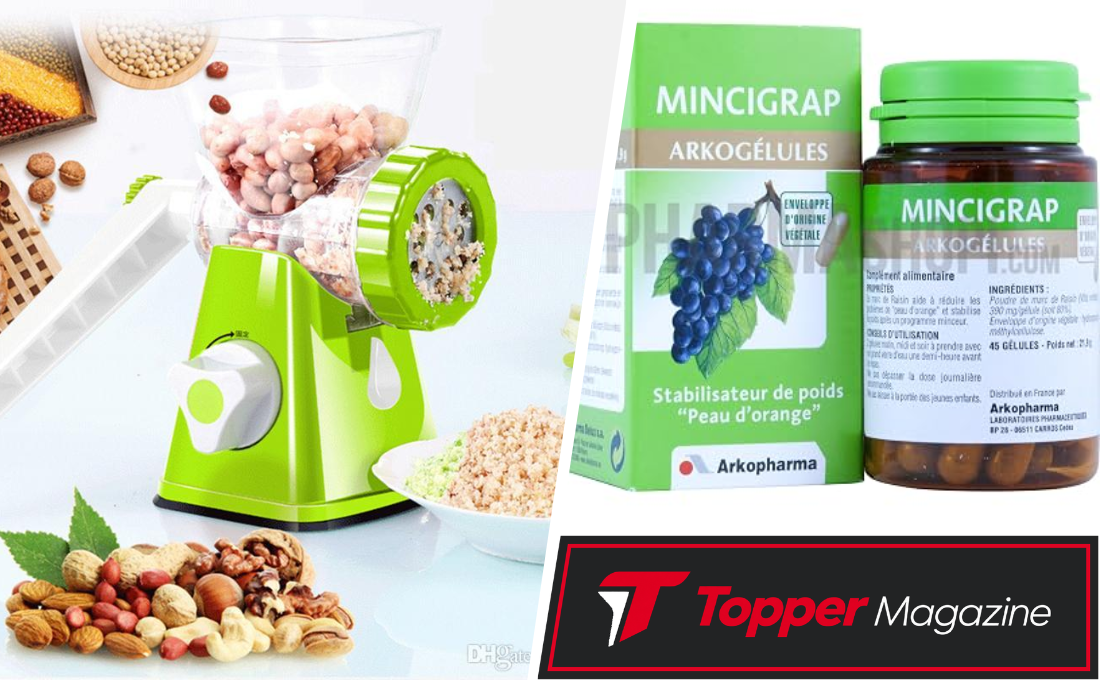
Mincigrap is a name that can look mysterious when you first see it online, but it has a real history. It was associated with Arkopharma and its Arkogélules range and was made mainly from grape pomace, the skins, seeds, pulp and other solid material left after grapes are pressed. Historical records show that Mincigrap was promoted as a food supplement connected with weight-control programs and the appearance of “orange-peel” skin.
So, was Mincigrap actually a weight-loss medicine? No. That is one of the most important things to understand. It was sold as a dietary or food supplement, and the evidence supporting its old slimming-related claims was much less certain than the marketing language might make someone think.
Quick Facts About Mincigrap
| Detail | Information |
|---|---|
| Product name | Mincigrap / Arkogélules Mincigrap |
| Associated brand | Arkopharma |
| Main ingredient | Grape pomace powder |
| Botanical name | Vitis vinifera |
| Historical amount | 390 mg per capsule |
| Historical pack size | 45 capsules |
| Product type | Food/dietary supplement |
| Main historical marketing | Weight maintenance after slimming and appearance of orange-peel skin |
| Medicine? | No, it should not be treated like a prescription weight-loss drug |
| Current availability | Appears limited or inconsistent in 2026 |
Historical pharmacy information and academic material list 390 mg of grape pomace powder per capsule. A French pharmacy listing also describes a 45-capsule package.
What Exactly Is Mincigrap?
Mincigrap was a plant-based supplement associated with the French company Arkopharma.
Its formula sounds surprisingly simple compared with many modern weight-management products. The main plant ingredient was grape pomace, known in French as marc de raisin.
Grape pomace is not a strange laboratory chemical. When grapes are squeezed to make wine or juice, liquid comes out, but skins, seeds, pulp and sometimes small pieces of stems remain behind.
That leftover material is called pomace.
Instead of simply throwing it away, manufacturers can dry and process it. Grape pomace contains fibre and naturally occurring plant compounds including polyphenols.
That explains why grape leftovers have attracted interest from researchers and supplement manufacturers.
But there is a big difference between saying an ingredient contains interesting plant compounds and saying a supplement has been clinically proven to cause weight loss.
That difference matters a lot with Mincigrap.
Where Did the Mincigrap Name Come From?
Mincigrap is not simply a new internet word.
Official World Intellectual Property Organization material records the MINCIGRAP trademark under Laboratoires ARKOMEDIKA SA in France. The international registration listed products in pharmaceutical, hygienic and dietary categories, with an underlying French registration dating to April 1995.
That gives the name a history stretching back decades.
It also helps explain why someone searching Mincigrap today may find very little modern information. The product belongs more to an earlier period of European herbal and slimming supplements than to today’s major international weight-management market.
What Was Inside Mincigrap?
One academic review from the University of Angers gives unusually clear information about the older formula.
It lists:
Grape pomace (Vitis vinifera) powder: 390 mg per capsule.
The same source calculated that six capsules would provide approximately 2.34 grams of grape pomace powder per day under the manufacturer’s historical directions.
A pharmacy listing similarly gives grape pomace powder at 390 mg per capsule and identifies Arkopharma as the manufacturer.
That makes Mincigrap much easier to understand.
It was basically a grape-pomace-based supplement rather than a complicated mixture of dozens of ingredients.
Why Was Grape Pomace Used?
Grape pomace contains several components that have attracted scientific interest.
Grape skins and seeds can contain polyphenols, tannins, anthocyanins and related compounds. These substances are one reason scientists continue studying grape-processing leftovers for possible uses in food, agriculture and nutritional products.
A European patent document discussing weight-control compositions even used Mincigrap as a comparison product and described it as a source of grape-pomace polyphenols. However, the document also refers largely to laboratory and animal research rather than strong clinical proof that Mincigrap itself causes meaningful human weight loss.
This distinction is easy to miss.
Imagine someone discovers that an apple contains useful nutrients. That does not automatically prove that an “apple capsule” will produce a particular medical result.
The same careful thinking should be used here.
Was Mincigrap Made for Weight Loss?
Mincigrap became associated with slimming programs, but calling it a proven weight-loss treatment would go too far.
Historical manufacturer claims connected grape pomace with reducing the appearance of “orange-peel” skin and helping stabilize weight after a slimming program. The University of Angers review recorded those claims but also noted that it could not establish an effective dose and found insufficient literature supporting the claimed weight-loss and cellulite-related effects of grape pomace.
That is an important finding.
Marketing may tell you what a product was designed or promoted to do.
Research tells you how confidently we can say it really does it.
Those two things are not always the same.
What Does Research Actually Say?
This is where the Mincigrap story becomes more interesting.
Grape pomace itself is scientifically interesting. Researchers have studied grape-derived polyphenols and their interaction with different biological processes.
But evidence concerning Mincigrap as a finished product is much thinner.
The University of Angers review was quite cautious. It reported that no clear recommendation could be established for the dose and that the claimed properties had not been sufficiently demonstrated for that formula.
Another document discussing slimming supplements likewise placed Arkogélules Mincigrap among products for which a firm conclusion about effectiveness and dosage could not be reached.
In simple words?
There is a difference between saying:
“Grape pomace contains compounds scientists study.”
and:
“Mincigrap has been proven to make people lose weight.”
The first statement is reasonable.
The second is not supported strongly enough by the material available.
Is Mincigrap the Same as Modern Weight-Loss Medicine?
No.
This is perhaps the easiest mistake readers can make.
Modern prescription weight-management medicines go through regulatory processes and clinical studies designed to measure things such as effectiveness, dose, side effects and risks.
Mincigrap was a plant-based dietary supplement.
It should therefore not be compared as if it were simply a natural version of a prescription drug.
Someone who needs medical help managing obesity, diabetes or another health condition should speak with an appropriate healthcare professional rather than replacing medical care with an old supplement.
How Was Mincigrap Historically Taken?
Older product information gives historical directions of two capsules in the morning, two at midday and two in the evening, taken with water around 30 minutes before meals.
That information is useful for understanding how the product was originally marketed.
However, it should not automatically be treated as a recommendation for someone to begin using an old packet found online.
Products change.
Formulas can change.
Stored supplements can expire.
And a product appropriate for one person may not be appropriate for someone taking medicines or living with a health condition.
Could Mincigrap Reduce Cellulite?
Older marketing connected the product with what is sometimes called “orange-peel skin,” a common phrase describing the dimpled appearance associated with cellulite.
But again, marketing claims need to be separated from solid evidence.
The academic review examining the product reported that it did not find enough evidence supporting grape pomace for reducing this appearance.
That does not mean researchers know absolutely nothing about grape compounds.
It means we should not turn limited evidence into a promise.
Anyone seeing dramatic statements such as “melts cellulite” or “guarantees a slimmer body” should be cautious.
Is Grape Pomace Useless Then?
Not at all.
This is another important point.
Questioning the weight-loss claims of one supplement does not mean grape pomace itself is useless.
Grape pomace is a fascinating by-product of grape processing. It can contain fibre and valuable plant compounds, and scientists continue exploring ways to reuse it rather than treating it simply as waste.
It can potentially be used in foods, extracts and other products.
The interesting story is therefore bigger than Mincigrap.
Something that once looked like leftover material from grape pressing can become an ingredient worth studying.
That is a clever example of how food waste can sometimes find another purpose.
Is Mincigrap Still Available in 2026?
Finding Mincigrap today is not as straightforward as finding a current mainstream Arkopharma supplement.
One French pharmacy product page still contains information for Arkogélules Mincigrap 45 capsules, but it marks the product as unavailable. Another pharmacy catalogue updated in 2026 still lists an Arkopharma Mincigrap product among its slimming products. This suggests old or limited listings continue to exist, but it does not establish broad current availability.
That is why readers should be careful when they find a forgotten supplement on an unfamiliar marketplace.
An online listing does not necessarily mean the item is newly manufactured.
Check the manufacturer, packaging, expiry date and seller before considering any supplement.
Why Are People Searching for Mincigrap Again?
Old product names can suddenly return to search results for several reasons.
Sometimes a forgotten package appears in someone’s cupboard.
Sometimes people discover an old pharmacy listing.
Sometimes a strange word begins appearing on blogs, search engines or social media and readers want to know whether it represents a company, medicine or website.
Mincigrap is especially confusing because its name does not immediately reveal what it is.
Without historical records, someone could easily assume it is a new app, website or technology company.
Instead, the available evidence points back to an older French grape-pomace dietary supplement.
Things to Check Before Buying an Old Supplement
When a product has been around for many years, the biggest question should not simply be, “Can I still buy it?”
A better question is, “Should I trust this particular product?”
Look carefully at the packaging, manufacturer, ingredient information and expiration date.
Be especially cautious when a seller promises extremely fast weight loss.
No capsule can replace the basics of long-term weight management, such as an appropriate diet, regular activity, sleep and medical support when needed.
And remember: “natural” does not automatically mean “safe for everyone.”
Plant ingredients can still interact with medicines or be unsuitable for particular people.
Mincigrap and the Problem With Old Internet Claims
The internet has a funny habit.
One website publishes something.
Another website rewrites it.
A third website rewrites the rewrite.
Soon a weak claim can begin to look like an established fact simply because it appears in many places.
Mincigrap is a good example of why checking original or historical sources matters.
Official trademark documents confirm that the name really existed.
Old pharmacy information confirms the product and its formulation.
Academic material confirms what manufacturers claimed while also showing that the scientific evidence was not strong enough to confidently support those claims.
That creates a much clearer picture than copying exaggerated marketing language.
What Mincigrap Teaches Us About Supplements
Perhaps the most useful thing about researching Mincigrap is the lesson it gives modern shoppers.
A supplement can contain a real plant ingredient.
The plant can contain scientifically interesting compounds.
The manufacturer can make attractive claims.
And yet there can still be uncertainty about whether the final product produces the promised result in humans.
All four things can be true at the same time.
That is why good health information should never stop at the front of the box.
Final Thoughts
Mincigrap was a real grape-pomace-based dietary supplement associated with Arkopharma and the Arkogélules range. Historical information identifies Vitis vinifera grape pomace powder as its main ingredient, with older formulations listing 390 mg per capsule.
It was promoted around slimming programs, weight stabilization and the appearance of orange-peel skin. However, available academic reviews did not establish convincing evidence for those specific effects or a clearly proven effective dose.
That is the key message.
Mincigrap has an interesting product history, but it should not be presented as a proven weight-loss medicine.
For readers discovering the name in 2026, it is best understood as an older French herbal supplement built around grape pomace—and a useful reminder to separate supplement marketing from solid scientific evidence.
Frequently Asked Questions About Mincigrap
What is Mincigrap?
Mincigrap was a dietary supplement associated with Arkopharma. Historical formulas used grape pomace powder from Vitis vinifera as the main ingredient.
What was Mincigrap used for?
It was historically marketed in connection with slimming programs, weight stabilization and the appearance of orange-peel skin.
Is Mincigrap a medicine?
No. Mincigrap was presented as a food or dietary supplement rather than a prescription weight-loss medication.
What was the main ingredient in Mincigrap?
Historical information lists 390 mg of grape pomace powder per capsule.
Does Mincigrap really cause weight loss?
Reliable evidence is not strong enough to say that Mincigrap has been proven to produce meaningful weight loss. An academic evaluation found insufficient evidence to establish its claimed effectiveness and effective dose.
Is grape pomace the same as grape seed extract?
Not exactly. Grape pomace can contain skins, seeds, pulp and other solid material remaining after grapes are pressed. Grape seed extract specifically concentrates compounds obtained from the seeds.
Is Mincigrap still sold?
Some pharmacy databases still contain Mincigrap listings, but availability appears inconsistent. One current listing marks the 45-capsule product as unavailable.
Should I use an old package of Mincigrap?
Do not use an expired or questionable supplement simply because an old package is available. Check the expiry date and manufacturer information and seek professional advice when health conditions or medicines are involved.
For more detailed celebrity-family biographies, hidden life stories, and interesting profiles behind famous names, visit Topper Magazine.
