

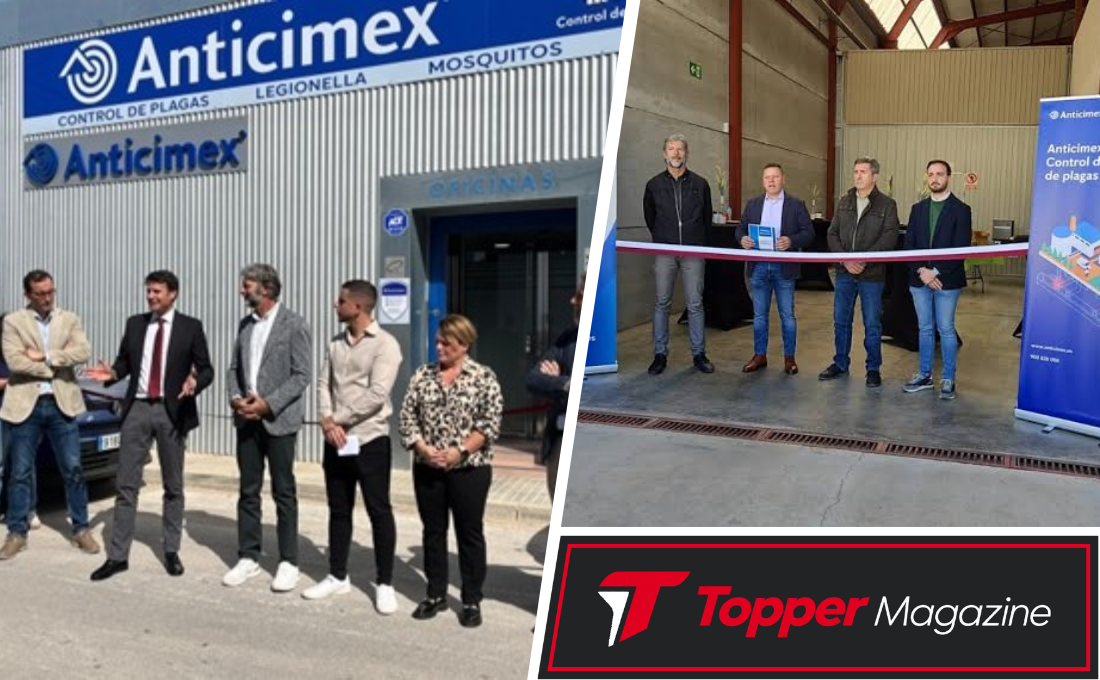
Anticimex 3D Sanidad Ambiental / WiseCon estrategia de consolidación is a phrase that brings together several real parts of the same business story: Anticimex’s Spanish environmental-health operation, its acquisition of Danish technology company WiseCon, and a wider strategy built around digital pest control and corporate integration.
It sounds complicated at first. In reality, the basic idea is easy to understand. Anticimex has been combining local pest-control expertise with connected sensors, automated traps, real-time information, and the integration of acquired businesses into a larger operating network.
Quick Facts
| Topic | Key detail |
|---|---|
| Spanish company | Anticimex 3D Sanidad Ambiental, S.A.U. |
| Main sector | Pest control and environmental health |
| WiseCon | Danish developer of electronic pest-control technology |
| First WiseCon investment | Anticimex bought 20% in 2015 |
| Full WiseCon control | Remaining 80% acquired in April 2017 |
| Technology direction | Connected monitoring, sensors and automated pest-control devices |
| Spanish consolidation | Multiple businesses have later been legally absorbed into Anticimex 3D Sanidad Ambiental |
| Main business idea | Combine local service coverage with centralized technology and preventive monitoring |
Anticimex’s Spanish legal notice confirms that the operating company behind anticimex.es is ANTICIMEX 3D SANIDAD AMBIENTAL, S.A.U., based in Sant Cugat del Vallès, Barcelona.
What Is Anticimex 3D Sanidad Ambiental?
One important point can prevent a lot of confusion.
“Anticimex 3D Sanidad Ambiental” is not simply the name of a futuristic three-dimensional monitoring product. It is the registered corporate name used by Anticimex in Spain. The company’s own legal information identifies it as Anticimex 3D Sanidad Ambiental, S.A.U.
Some online articles have tried to explain “3D” as if it automatically means concepts such as detection, deterrence and defence. That interpretation should be treated carefully because Anticimex’s current official material does not present the Spanish corporate name that way.
What can be verified is much more interesting.
Anticimex operates environmental-health and pest-control services while increasingly using digital tools to watch for pest activity continuously rather than relying only on occasional physical inspections.
That difference is important.
Traditional pest control may involve a technician visiting a site, checking signs of activity and taking action. A connected system can continue gathering information between those visits.
This turns pest management from a mostly reactive service into something more preventive.
Where Does WiseCon Fit Into the Story?
WiseCon is one of the most important pieces of the technology side of this story.
Anticimex announced that it acquired a 20% stake in WiseCon in January 2015. WiseCon specialized in electronic pest-control equipment, particularly connected systems for rodents. Anticimex said at the time that the investment supported its strategy of expanding digital pest-control services.
Then came the bigger move.
On April 26, 2017, Anticimex announced that it was purchasing the remaining 80% of WiseCon. The company also said it would establish an innovation center for digital pest control in Helsinge, Denmark.
That made WiseCon much more than an outside equipment supplier.
Its technology and expertise could now be developed as part of Anticimex’s wider digital strategy.
At the time of the 2017 announcement, Anticimex said more than 20,000 SMART rodent devices had already been installed worldwide and that more than 20% of its new sales involved SMART digital traps. Those figures describe the business at that particular point in 2017 rather than its current scale.
From Pest-Control Visits to 24/7 Monitoring
This is where the Anticimex–WiseCon relationship becomes easier to understand.
Imagine a food warehouse.
Under a traditional system, technicians may visit according to a schedule. They inspect traps, look for signs of rodents and decide whether treatment is needed.
But what happens between visits?
That is the problem connected monitoring tries to solve.
Anticimex says its current SMART system uses strategically placed sensors and traps that remain connected to its data infrastructure. When activity appears, information can be reported so that the situation can be assessed and action taken.
The company’s Spanish site currently says it has more than 25,000 monitored Anticimex Smart installations. It also says the system is designed for constant monitoring and proactive reactions rather than depending only on periodic physical checks.
This is a major change in the service model.
The technician is still important. Technology does not magically solve every pest problem by itself.
Instead, connected equipment gives technicians more information about when and where activity is happening.
How Anticimex SMART Works
The process starts with inspection.
Anticimex says its teams first examine a site, study risk areas, review available information and identify important locations where pest activity could occur.
Then connected equipment can be installed.
Depending on the situation, this may include sensors, cameras or traps.
Once connected, those devices can continuously send information.
If activity is detected, technicians can respond based on real evidence rather than simply waiting for the next routine inspection.
Anticimex’s current Spanish product information says its SMART network includes more than 300,000 connected units sending information to the company’s Smart data center. The company describes the resulting data as a way to support proactive pest-management decisions.
Why WiseCon Was Strategically Important
Buying WiseCon was not simply about buying another company.
It also gave Anticimex greater control over technology that was becoming central to its service.
Think about the difference between renting an important tool from somebody else and owning the team that develops that tool.
When a business controls more of its core technology, it can potentially coordinate product development, field operations and customer services more closely.
Anticimex itself described the WiseCon acquisition as a way to strengthen its position in digital pest control and combine the digital expertise of both organizations within an innovation center.
That makes the acquisition easier to understand as a form of technology consolidation.
Rather than keeping hardware development separated from pest-control operations, Anticimex brought those capabilities together.
What Does “Estrategia de Consolidación” Mean Here?
The Spanish phrase estrategia de consolidación means “consolidation strategy.”
But consolidation does not have only one meaning.
In this case, it can be understood at several levels.
There is technological consolidation through WiseCon.
There is operational consolidation as local pest-control businesses become part of a larger Anticimex network.
And there is legal corporate consolidation when subsidiaries are formally absorbed into Anticimex 3D Sanidad Ambiental.
The public record in Spain shows that this last process has happened repeatedly.
In 2021, Anticimex 3D Sanidad Ambiental absorbed Rains Control de Plagas.
In December 2022, it approved the absorption of Control Natural de Plagas Mediterranean, Stop Plagues and Montañesa de Desinfección.
Parasitec was absorbed through another merger approved in 2023.
In 2025, Spanish corporate records documented the absorption of Gabinete Técnico de Sanidad Ambiental, GTSA Pest Control and Plaserman Salud Pública.
The process continued in 2026.
Corporate records published in Spain’s official commercial registry show a merger by absorption involving Pest System International, followed later by another involving Tratamientos Higiene Alba.
These filings provide unusually clear evidence that consolidation is more than a vague business buzzword in this case.
A Simple Timeline of the Strategy
| Year | Development |
|---|---|
| 2015 | Anticimex acquires 20% of WiseCon |
| 2017 | Anticimex buys the remaining 80% and announces a digital pest-control innovation center |
| 2017 | Anticimex also continues expanding geographically in Spain through acquisitions |
| 2021 | Rains Control de Plagas is absorbed into Anticimex 3D Sanidad Ambiental |
| 2022 | Three additional Spanish entities are absorbed |
| 2023 | Parasitec is absorbed |
| 2025 | GTSA-related businesses and Plaserman are absorbed |
| 2026 | Pest System International and later Tratamientos Higiene Alba are involved in additional mergers by absorption |
The 2017 expansion announcement is especially revealing. Anticimex said its acquisitions in Toledo and Benidorm were part of a strategy to grow throughout Spain through both organic growth and further acquisitions.
Why Buy Local Pest-Control Companies?
Pest control is a highly local service.
A technician needs to understand the building, surrounding environment, local pest behaviour and customer needs.
That makes local knowledge valuable.
At the same time, a larger international group can provide technology, software, training, purchasing power and standardized systems.
The consolidation model attempts to combine those two advantages.
A local business can bring customers, technicians and geographic coverage.
Anticimex can bring a wider operating structure and digital tools.
When integration works properly, the result can be broader local coverage without abandoning the technology platform being developed at group level.
That appears to be one of the central ideas behind Anticimex’s Spanish expansion.
Technology Changes What a Pest-Control Company Sells
This might be the most interesting part of the entire story.
A traditional pest-control company mainly sells treatments and technician visits.
A digitally connected pest-control company can increasingly sell continuous risk monitoring.
That is a very different relationship with customers.
A supermarket, hotel, food factory or warehouse does not only want someone to remove a rat after it appears.
It wants to know that problems are being watched before they become serious.
Anticimex describes SMART as a constant system combining digital monitoring with traditional professional services.
That combination matters.
Sensors provide information.
Professionals interpret it and decide what should happen next.
Can Smart Pest Control Reduce Chemical Use?
One of Anticimex’s biggest claims around SMART is that some connected rodent-control solutions can reduce reliance on biocides.
For example, its Smart Box is designed to detect and kill rodents mechanically rather than using toxic bait. Sensors then report activity and captures.
Its Spanish SMART page similarly describes a system using data and connected devices as part of a more environmentally focused approach.
This does not mean every pest problem can be solved without chemicals.
Different pests, buildings and infestation levels require different professional approaches.
The safer conclusion is that digital monitoring can give pest-control teams another tool and may allow certain rodent programs to rely less heavily on chemical treatment.
Why Real-Time Data Matters
Imagine finding evidence of rats in a warehouse on Monday.
If the next scheduled inspection is not until Friday, several days may pass before someone sees the problem.
Connected monitoring changes the timing.
Anticimex describes sensors that can report activity as it happens, allowing quicker investigation.
This is especially useful in businesses where hygiene problems can have large consequences.
Food production is an obvious example.
So are restaurants, hotels, hospitals and storage facilities.
A small pest problem can become a larger operational problem if nobody notices it early.
The value of digital pest control therefore comes partly from reducing the gap between activity and awareness.
Consolidation Also Creates Challenges
Buying businesses and integrating technology may sound simple on paper.
It rarely is.
Different companies may use different software, procedures, equipment and working habits.
Customers may also have long relationships with local teams and may not want their service experience to suddenly feel completely different.
Technology creates its own challenges.
Connected sensors must be reliable.
Data has to be useful rather than simply plentiful.
Technicians need training.
Customers need reports that are easy to understand.
That means consolidation works best when integration improves operations rather than simply making the organization bigger.
This is an analytical point rather than a claim made by Anticimex itself, but it is important when evaluating any acquisition-led business strategy.
Is WiseCon Still a Separate Competitor?
Not in the way the phrase sometimes suggests.
Anticimex acquired the remaining WiseCon ownership in 2017 and said WiseCon’s digital expertise would be combined with Anticimex’s own capabilities.
So it is misleading to describe modern Anticimex and WiseCon as two unrelated competitors simply working together.
WiseCon became part of Anticimex’s technology development story.
There is also another company with a very similar name, WiseConn, associated with agricultural technology.
That should not be confused with WiseCon, the Danish pest-control technology business acquired by Anticimex.
What Makes the Strategy Interesting?
The clever part is not simply buying companies.
Large businesses make acquisitions all the time.
What makes this case more interesting is the combination of two forms of expansion.
Anticimex has expanded its physical service network by adding and integrating pest-control operations.
At the same time, it has invested in technology that changes how those services can be delivered.
That creates a model where scale is not only about having more branches.
It is also about putting more locations onto a shared digital service system.
The long-term value of such a model depends on execution, customer results and continued technology development, so it would be wrong to assume that acquisitions automatically guarantee better service.
But the strategic direction is visible in both Anticimex’s own announcements and Spanish corporate records.
What Does the Spanish Consolidation Tell Us?
The Spanish merger records are particularly useful because they show what happens after expansion.
A company can purchase businesses while continuing to operate them as separate legal entities.
Later, those entities can be merged into one corporate structure.
That appears repeatedly in the Anticimex 3D Sanidad Ambiental filings.
This can simplify ownership structures and centralize administration.
However, the registry documents mainly tell us that the legal mergers occurred. They do not by themselves prove how much efficiency each merger produced or whether customers experienced better service.
That distinction is important.
Legal consolidation is a fact.
Operational success has to be measured separately.
The Bigger Picture for Environmental Health
Pest control used to appear to be a fairly simple industry.
Find the pest.
Set the trap.
Apply treatment.
Leave.
Technology is making the picture more complex.
Modern providers can now combine physical inspections with sensors, cameras, connected traps, automated alerts and data analysis.
Anticimex’s current Spanish SMART offering includes devices for rodents and insects as well as monitoring related to indoor air and water.
That suggests the broader environmental-health business is moving toward continuous monitoring rather than isolated interventions.
It is closer to managing an ongoing risk system.
Final Thoughts
Anticimex 3D Sanidad Ambiental / WiseCon estrategia de consolidación becomes much easier to understand once the names are separated.
Anticimex 3D Sanidad Ambiental is the Spanish corporate entity.
WiseCon was a Danish technology company in which Anticimex first acquired a minority position and then full ownership.
The consolidation strategy is visible in two directions: integration of digital technology and continued integration of pest-control businesses into the Spanish operation.
The result is a model built around prevention, connected monitoring and scale.
Instead of thinking only about someone arriving after pests are discovered, the goal is increasingly to know what is happening continuously and respond earlier.
That shift—from scheduled treatment toward data-supported prevention—is the real story behind the complicated search phrase.
FAQs
What is Anticimex 3D Sanidad Ambiental?
Anticimex 3D Sanidad Ambiental, S.A.U. is the legal corporate name used by Anticimex’s Spanish operation. It works in pest control and environmental-health services.
What is WiseCon?
WiseCon was a Danish company specializing in electronic pest-control technology. Anticimex initially acquired 20% of the company and bought the remaining 80% in 2017.
Did Anticimex acquire WiseCon?
Yes. Anticimex acquired 20% in 2015 and announced its acquisition of the remaining 80% on April 26, 2017.
What is the Anticimex consolidation strategy?
There is no need to treat that phrase as the name of one official product. In practical terms, it describes Anticimex’s pattern of combining acquisitions, corporate integration and digital pest-control technology.
Does Anticimex use smart sensors?
Yes. Anticimex says its SMART system uses connected sensors and other devices to monitor pest activity continuously and support proactive responses.
Is WiseCon the same as WiseConn?
No. The WiseCon involved in the Anticimex transaction was the Danish pest-control technology company. It should not be confused with similarly named companies operating in other technology sectors.
Has Anticimex continued consolidating businesses in Spain?
Yes. Spanish commercial-registry notices document several mergers by absorption involving Anticimex 3D Sanidad Ambiental, including transactions published in 2021, 2022, 2023, 2025 and 2026.
For more detailed celebrity-family biographies, hidden life stories, and interesting profiles behind famous names, visit Topper Magazine.
