

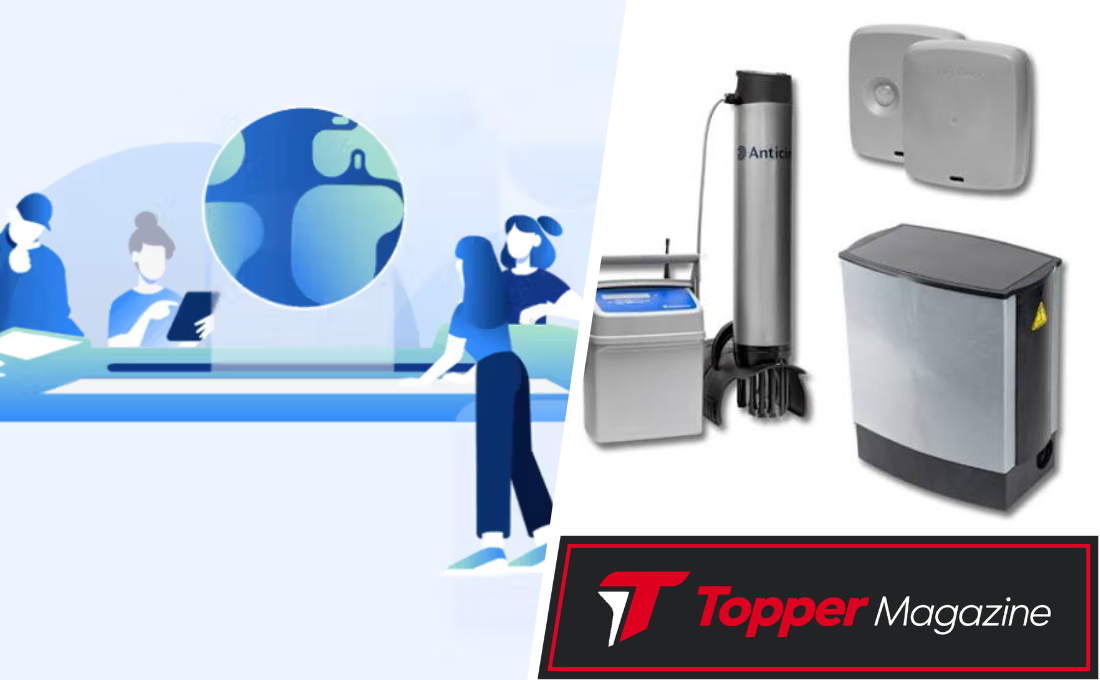
Anticimex 3D Sanidad Ambiental / WiseCon estrategia de plataforma sounds like a complicated technology phrase, but the basic idea is much easier to understand. It connects the Spanish environmental-health business of Anticimex with the digital pest-control technology that grew from WiseCon, a Danish company that later became part of the Anticimex Innovation Center.
Instead of depending only on someone visiting a building every few weeks and checking traditional traps, Anticimex has developed connected sensors and pest-control devices that can monitor locations continuously. The goal is simple: discover pest activity earlier, collect useful data and help technicians react before a small problem becomes a serious infestation.
That is where the idea of a “platform strategy” becomes interesting. It is less about one clever trap and more about connecting devices, information, technicians and customers into one larger system.
What Is Anticimex 3D Sanidad Ambiental?
Anticimex 3D Sanidad Ambiental, SAU is the legal company name shown by Anticimex for its Spanish operation. Its official legal notice lists the company in Sant Cugat del Vallès, Barcelona, while the Spanish Anticimex website describes the business as specializing in pest control and environmental health.
For an ordinary customer, however, the legal company name is not the most important part.
The important idea is environmental protection.
Pests can appear in houses, hotels, restaurants, warehouses, offices, food plants and many other places. Traditional pest control often reacts after somebody notices insects, rats or another problem.
Modern digital systems try to catch the warning signs earlier.
Anticimex says its Spanish operations combine environmental-health knowledge with preventive pest management. Its services include traditional pest-control methods alongside increasingly digital solutions.
That combination is important because technology cannot completely replace human expertise.
A sensor may tell you that activity has occurred in a particular area. A trained professional still needs to understand why the activity happened, whether there is a food source nearby, where pests may be entering and what corrective action makes sense.
Where Does WiseCon Enter the Story?
WiseCon is an important part of the history behind Anticimex’s digital transformation.
The company was based in Denmark and worked with electronic pest-monitoring technology. Anticimex first acquired a 20% stake in WiseCon in January 2015.
Then, in April 2017, Anticimex announced that it had acquired the remaining 80% of WiseCon. At the same time, the company said it would establish an Innovation Center focused on developing digital pest-control solutions.
This was much more than simply buying another small business.
Anticimex said its SMART concept was based on WiseCon technology. At the time of the 2017 acquisition, more than 20,000 SMART rodent devices had already been installed around the world.
Today, Anticimex describes its Innovation Center in Denmark as formerly WiseCon.
The center works on research, development, digital products and SMART devices. Anticimex says the SMART concept was launched in 2014 and combines technology with biological knowledge and the company’s long experience in pest management.
So WiseCon did not simply disappear.
Its technology and expertise became part of a much larger Anticimex system.
Is “WiseCon Estrategia de Plataforma” an Official Product?
This point is worth explaining because the search phrase can be confusing.
In Anticimex’s own current material, the customer-facing digital system is called Anticimex SMART, while WiseCon is described as the former company behind today’s Anticimex Innovation Center.
Therefore, “WiseCon estrategia de plataforma” is best understood as a descriptive way of discussing the company’s technology strategy rather than as the name of a separate current Anticimex product.
Think of it this way.
WiseCon helped provide some of the technology foundation. The Anticimex Innovation Center develops that technology. Anticimex SMART is the digital pest-control solution that customers actually encounter.
The “platform” idea comes from connecting all those pieces.
Quick Overview
| Area | What It Means |
|---|---|
| Anticimex 3D Sanidad Ambiental | Anticimex’s Spanish legal operating company |
| WiseCon | Danish technology company integrated into Anticimex |
| Anticimex Innovation Center | The R&D center that Anticimex says was formerly WiseCon |
| Anticimex SMART | Digital pest-control system using connected devices and monitoring |
| Main approach | Prevention, continuous monitoring and data-supported response |
| Typical technology | Sensors, connected traps, monitoring systems and digital reporting |
| Main advantage | Detecting activity earlier instead of waiting for the next physical inspection |
How the Anticimex SMART System Works
Imagine a large warehouse.
A normal inspection might happen once every few weeks. Everything could look fine when the technician visits.
But what happens the next night?
A rat might enter through a damaged door, travel behind storage racks and reach an area where food is kept.
With only periodic inspections, somebody may not notice immediately.
Digital monitoring changes that situation.
Anticimex explains that SMART installations begin with an inspection of the site. Critical areas are studied, relevant information is reviewed and a suitable plan is created.
Sensors and traps can then be installed in carefully selected locations.
Those connected units continually send information to Anticimex’s data systems. If pest activity is detected, technicians can respond based on the information being collected rather than simply waiting for the next routine visit.
This changes pest control from a calendar-based activity into something closer to continuous monitoring.
Why 24/7 Monitoring Matters
Pests do not follow office hours.
A mouse does not wait until a technician arrives before entering a warehouse. Cockroaches do not appear only during scheduled inspections.
That is the basic reason continuous monitoring can be useful.
Anticimex says SMART provides round-the-clock surveillance and enables proactive responses when activity is detected. Its Spanish website says the system has more than 25,000 monitored installations.
The system can also monitor places that are difficult for people to inspect regularly.
Small sensors may be placed in areas where rodents are likely to move. Other devices are designed for particular environments, including sewer systems.
The technology does not guarantee that pests can never enter a property. Instead, its value is in improving visibility and helping problems become noticeable sooner.
The Devices Behind the Platform
A platform becomes useful only when real devices can collect meaningful information.
Anticimex has developed several SMART products for different situations.
SMART Box is designed as a multicapture rodent trap. SMART Pipe is intended for rodent control within sewer systems. SMART Eye is a compact movement sensor that can be positioned in narrow areas, while SMART Catch combines trapping with pest-activity detection.
There are also digital solutions aimed at insects.
For example, Anticimex describes SMART Sense as a system capable of detecting insect activity and automatically reporting it to support early detection.
The important idea is that these devices do not operate as isolated objects.
They form part of a connected monitoring environment.
That is why thinking of the technology as a platform makes sense.
Data Is Becoming as Important as the Trap
An ordinary trap gives you a simple result.
Something was caught, or nothing was caught.
A connected device can provide much more useful information over time.
Where did activity happen? When did it happen? Is the activity increasing? Has it moved to another part of the building? Are there repeated problems near the same entry point?
Patterns like these can help technicians understand what is happening rather than repeatedly treating symptoms.
Anticimex says information from connected SMART devices is sent to its data center and analyzed so appropriate measures can be taken. Digital reports can also provide customers with documentation about pest conditions and treatment activity.
This is an important part of the wider platform idea.
The hardware sees something.
The network reports it.
Data systems record it.
Experts interpret it.
Then a response can be planned.
Why Anticimex Acquired WiseCon
The acquisition makes more sense when viewed through this technology model.
Anticimex was already a large pest-control business. WiseCon brought expertise in electronic pest-monitoring technology.
When Anticimex bought the remaining 80% of WiseCon in 2017, the company specifically described the move as strengthening its position in digital pest control and announced the creation of an Innovation Center.
That allowed the group to bring important technology development more closely into its own organization.
It could combine traditional knowledge about pests with engineers, connected hardware, digital services and data analysis.
Anticimex’s current history shows how large that strategy became.
The company says it reached 500,000 installed SMART devices in 2024 and more than 600,000 installations worldwide by 2025. It also says that WiseCon’s acquisition led to the Innovation Center that now serves as the group’s R&D hub.
Those figures show that digital pest management has moved far beyond a small experiment.
A Platform Rather Than Just a Product
There is an important difference between selling a product and building a platform.
A single trap is a product.
A connected trap that sends information to a data center is part of a system.
Add several different sensors, technicians, analytics, reporting and customer information, and you begin to have something closer to a platform.
This approach can also make expansion easier.
A company operating a hotel group, supermarket chain or network of warehouses may have many locations.
Instead of treating every building as a completely separate project, connected monitoring can help create a more consistent process across multiple sites.
Anticimex’s Spanish website says it serves customers throughout Spain and specifically highlights solutions for companies operating across multiple geographic locations.
That makes standardization particularly valuable.
Why Prevention Is Becoming More Important
Old-fashioned pest control could sometimes feel like firefighting.
A problem appeared.
Someone complained.
A technician arrived.
Treatment began.
Preventive pest management attempts to change the order.
First, identify risk.
Then monitor it.
Next, look for early warning signs.
Finally, intervene before the situation becomes much worse.
Anticimex repeatedly presents prevention as a central idea behind SMART. The company says continuous monitoring can help identify pest activity even in difficult-to-access places and allow faster action.
For businesses, early detection can matter because pest problems may affect food safety, property, operations and customer confidence.
A single unnoticed problem in the wrong place can become expensive surprisingly quickly.
What About Sustainability?
Modern pest management is also moving toward reducing unnecessary chemical use.
Anticimex says its SMART approach uses connected monitoring and pest-control devices designed to reduce dependence on biocides. The company also argues that remote monitoring can reduce unnecessary technician journeys because teams have better information about when action is actually required.
That does not mean every pest problem can be solved simply by installing electronics.
Environmental conditions still matter.
Food, water, waste, damaged doors, cracks, drainage systems and poor building maintenance can all create pest risks.
Technology is most useful when it supports a complete prevention strategy rather than being treated as magic.
Where Could This Technology Be Useful?
Digital pest monitoring has obvious value anywhere that unnoticed pest activity could become costly.
Food production is one example because contamination risks must be taken seriously.
Hotels also need to protect guests and their reputation.
Warehouses may contain large quantities of goods with many hidden spaces.
Pharmaceutical facilities have strict standards and cannot easily tolerate pest activity.
Municipal authorities may also need to monitor rodent populations across larger areas.
Anticimex markets SMART solutions for several of these environments, including hotels, pharmaceutical facilities and municipalities.
The exact setup will naturally depend on the building and the type of pest risk.
How WiseCon Changed Anticimex
The most interesting part of the WiseCon story may not be the acquisition itself.
It is what happened afterward.
WiseCon’s technology did not remain a small independent product line. Anticimex integrated its expertise into a wider digital strategy.
The former WiseCon organization became the Anticimex Innovation Center in Denmark, which today works on SMART devices and digital services. Anticimex says the center combines technology, data and service while developing alternatives intended to reduce dependence on pesticides.
That makes WiseCon an important chapter in Anticimex’s move from conventional pest-control services toward technology-supported prevention.
The Bigger Business Lesson
There is also a business story hidden inside Anticimex 3D Sanidad Ambiental / WiseCon estrategia de plataforma.
Technology companies often try to replace traditional industries.
This case followed a different path.
Anticimex already understood pest-control operations. WiseCon brought specialized technology. Putting them together allowed the group to combine physical service with digital infrastructure.
That is useful because technology works best when it solves a real operational problem.
Customers do not usually care whether a trap contains an impressive sensor simply because the sensor is new.
They care about whether their building stays safer.
They care about finding problems early.
They care about understandable reports.
And they care about somebody responding when the system detects something important.
The technology has value when all those pieces work together.
What the Future Could Look Like
Digital pest control will likely become increasingly data-driven.
More connected devices can create larger datasets. Better datasets can reveal recurring patterns. Better patterns can help businesses understand where their biggest risks exist.
But there is an important balance.
Data should support professional judgment rather than replace it blindly.
Pests behave differently depending on buildings, seasons, food sources, weather, maintenance and many other factors.
A skilled technician can see context that a sensor alone may miss.
For that reason, the strongest model is likely to remain a combination of people and technology.
That is also how Anticimex describes SMART: digital monitoring combined with professional pest-control knowledge and service.
Final Thoughts
Anticimex 3D Sanidad Ambiental / WiseCon estrategia de plataforma is easiest to understand as the story of pest control becoming connected, preventive and data-driven.
Anticimex 3D Sanidad Ambiental represents the company’s Spanish environmental-health operation. WiseCon contributed technology that became deeply connected to Anticimex’s SMART development, and the former WiseCon organization now forms the Anticimex Innovation Center in Denmark.
The customer-facing result is Anticimex SMART: a network of sensors, traps, data systems and professional services designed to monitor pest activity continuously and support earlier responses.
So the real change is not simply a smarter mousetrap.
It is the move from checking occasionally to watching continuously, from reacting after a problem appears to trying to identify risk earlier, and from isolated devices to a connected pest-management system.
FAQs
What is Anticimex 3D Sanidad Ambiental?
Anticimex 3D Sanidad Ambiental, SAU is the legal name used for Anticimex’s Spanish company. Anticimex Spain provides pest-control and environmental-health services for homes, companies and other organizations.
What is WiseCon?
WiseCon was a Danish business specializing in digital pest-control technology. Anticimex bought a 20% stake in 2015 and acquired the remaining 80% in 2017.
Does WiseCon still exist inside Anticimex?
Anticimex describes its present Innovation Center in Denmark as formerly WiseCon. The center now develops SMART devices and digital services for the wider Anticimex group.
What is Anticimex SMART?
Anticimex SMART is the company’s digital pest-control system. It uses connected sensors, traps, monitoring and data analysis to provide continuous surveillance and support proactive pest management.
Is “WiseCon estrategia de plataforma” an official Anticimex product name?
Anticimex’s own current materials refer to Anticimex SMART and the Anticimex Innovation Center. Therefore, “WiseCon estrategia de plataforma” is better treated as a descriptive term for the technology and platform approach rather than the official name of a separate current product.
Does Anticimex SMART work 24 hours a day?
Anticimex describes SMART as a 24/7 digital pest-control approach in which connected devices continually monitor activity and send information to its systems.
Why was the WiseCon acquisition important?
It gave Anticimex deeper access to digital pest-control technology and led to the creation of an Innovation Center dedicated to developing digital solutions for the group.
Is smart pest control only about rodents?
No. Anticimex offers SMART technology for rodents as well as digital insect monitoring and other environmental applications.
For more detailed celebrity-family biographies, hidden life stories, and interesting profiles behind famous names, visit Topper Magazine.
