

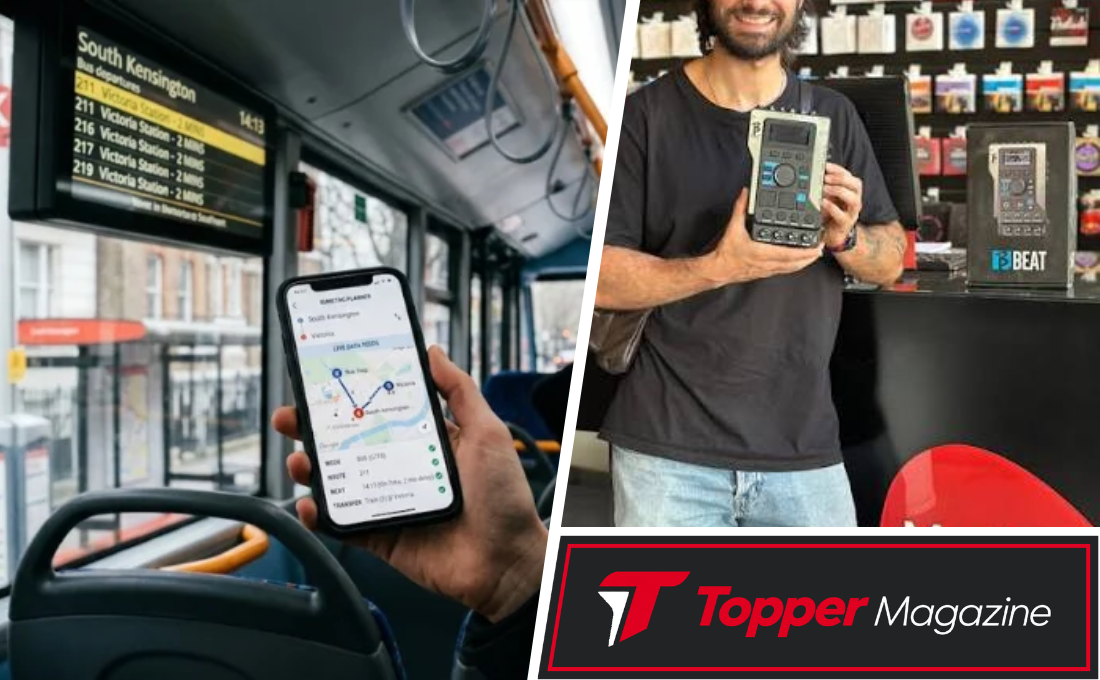
Bumetro is a term appearing online in discussions about smarter city travel and connected transportation. The basic idea often linked with it is simple: instead of opening one app for a bus, another for a train, and another for a bicycle or shared ride, travelers could see different transport choices together. This fits into the wider idea of smart multimodal mobility, which organizations such as the European Commission describe as using digital technology to make travel more connected, efficient, and sustainable.
There is something important to understand, though. Bumetro does not currently have the same clear public identity as famous transport services such as London Underground, Uber, Google Maps, or Citymapper. Information under the name is still limited and sometimes inconsistent. Because of that, it is safer to understand Bumetro as an emerging smart-mobility idea or search term rather than assume every feature mentioned online belongs to one officially confirmed global service.
So, what could Bumetro actually mean? How could this type of technology make city travel easier? And why are people suddenly searching for it? Here is a simple guide.
Quick Overview of Bumetro
| Detail | Information |
|---|---|
| Name | Bumetro |
| Main Topic | Smart urban mobility |
| Possible Purpose | Making city journeys easier to plan |
| Transport Types | Bus, train, metro, walking, bikes and shared transport |
| Main Idea | Bringing different travel choices together |
| Technology | Digital route planning and transport information |
| Possible Users | Commuters, students, tourists and city residents |
| Key Benefit | Easier comparison of different journeys |
| Sustainability Focus | Encouraging public and lower-emission transport |
| Status | Emerging/ambiguous term with limited official information |
What Is Bumetro?
Bumetro is commonly described online as a smart approach to urban transportation.
Imagine that you need to travel from your home to an office on the other side of a large city. Walking the entire distance is impossible. There is no direct bus, and the closest train station is a few kilometers away.
Your trip might therefore look like this:
Walk five minutes to a bus stop, take a bus to the train station, travel by train into the city center, and then walk another ten minutes.
Normally, you might need several apps or websites to organize everything.
A Bumetro-style system tries to put the complete journey in one place.
Instead of thinking about each vehicle separately, the system thinks about your entire trip.
That small difference can make urban travel much easier.
Why Is Bumetro Becoming an Interesting Search Term?
Cities are getting bigger, and the way people travel is becoming more complicated.
Years ago, many commuters simply drove a car or used one bus route. Today, a city resident may have far more choices.
There are buses, trains, metros, trams, shared bicycles, electric scooters, taxis, rideshare cars and walking routes.
More choice sounds wonderful.
But more choice can also create confusion.
Which route is fastest?
Which one is cheapest?
Will the train arrive on time?
Can you cycle part of the journey?
Is taking the bus better than paying for a taxi?
A smart mobility platform tries to answer these questions quickly.
That is why ideas connected with Bumetro can sound attractive.
Bumetro and the Idea of Mobility as a Service
To understand Bumetro better, it helps to understand something called Mobility as a Service, usually shortened to MaaS.
The name sounds complicated, but the idea is very easy.
Think about Netflix.
Netflix places thousands of movies and television shows inside one service. You do not need a different machine for every movie.
Mobility as a Service tries to bring a similar feeling to transportation.
Instead of treating a bus, bicycle, taxi and train as completely separate systems, MaaS tries to connect them digitally.
A traveler enters where they are and where they want to go.
The platform can then suggest possible combinations.
For example:
Home → Bicycle → Railway Station → Train → Walk → Office.
The traveler sees the whole trip instead of trying to build it piece by piece.
How Could Bumetro Work?
A smart urban mobility system normally begins with two pieces of information.
Where are you?
Where do you want to go?
After receiving these details, the system can examine available transport options.
It may discover that taking a direct taxi requires 35 minutes and costs much more than public transportation.
Another route may involve ten minutes on a bus, twenty minutes on a train and a five-minute walk.
A third route could involve cycling.
The user can then compare the options.
This is much easier than checking each transport provider separately.
Multimodal Route Planning
One of the most useful ideas associated with Bumetro is multimodal route planning.
“Multi” means many.
“Modal” refers to different methods of transportation.
Therefore, multimodal travel simply means using more than one type of transport during a journey.
You may already do this without thinking about it.
Perhaps you walk to a station every morning, catch a train and then take a bus.
That is a multimodal journey.
Technology can make this process much smoother by organizing every stage in the correct order.
Real-Time Travel Information
A travel plan is only helpful when the information behind it is accurate.
Suppose an app tells you that your bus arrives at 8:20 a.m.
You reach the stop at 8:15.
Then you discover that the bus is delayed by 25 minutes.
Suddenly, your carefully planned journey is useless.
This is why live information has become such an important part of modern transportation technology.
A smart system may use data supplied by transport networks to show updated arrival and departure times.
When something changes, the journey can potentially change too.
Instead of waiting for a delayed bus, the platform might suggest another route.
That can save time and reduce frustration.
Comparing Journey Times
Fastest does not always mean best.
Imagine two routes.
Route A takes 30 minutes but requires an expensive taxi.
Route B takes 38 minutes using a train and walking.
Someone rushing to an airport may choose Route A.
A student traveling to university every morning might prefer Route B.
A useful mobility platform should therefore provide choices rather than simply announcing one “best” journey.
Different people have different priorities.
Bumetro-style route planning could make those differences easier to understand.
Could Bumetro Show Travel Costs?
Price is one of the biggest questions when people choose how to travel.
A taxi might be convenient but expensive.
A bus may cost far less.
A shared bicycle might be even cheaper for a short journey.
Seeing estimated prices beside each route could help travelers make better decisions.
Imagine seeing:
Fastest route: 24 minutes.
Cheapest route: 39 minutes.
Lowest walking route: 31 minutes.
Suddenly, choosing becomes much easier.
However, estimated prices should never be confused with guaranteed final fares. Transport prices can change depending on local rules, zones, demand and individual operators.
Bumetro and Greener Travel
Transportation affects the environment.
Millions of individual car journeys can create traffic, consume fuel and contribute to air pollution.
Public transport can move many people using fewer vehicles.
Walking and cycling can be even cleaner for short journeys.
A smart mobility system may therefore encourage travelers to consider greener choices.
For example, imagine two journey options.
One involves driving alone for 12 kilometers.
The second involves walking to a train station and taking the train.
If the platform clearly shows the environmental difference, some users may choose the second option.
Not everyone will change.
But thousands of small decisions can eventually matter.
Why Public Transport Still Matters
Technology cannot replace buses and trains.
This is an important point.
A beautiful app cannot help much if the bus never arrives.
A clever algorithm cannot repair a railway line.
And a route planner cannot magically create transport services in an area where none exist.
Smart mobility works best when it sits on top of a strong real-world transport network.
Think of the app as the brain helping organize the journey.
The roads, stations, buses and trains are still the body doing the real work.
Both are needed.
Bumetro for Daily Commuters
Regular commuters could be among the people who benefit most from connected transport tools.
Someone traveling to work five days a week already knows their normal route.
But problems happen.
A train gets cancelled.
Traffic blocks the main road.
A station temporarily closes.
A bus arrives late.
A smart platform could quickly suggest alternatives.
Instead of spending ten minutes searching through different websites, the commuter could potentially see another journey immediately.
That convenience becomes especially valuable when someone is already late.
Bumetro for Students
Students often need affordable transportation.
Many do not own cars.
They may depend on buses, trains, bicycles and walking.
Cost is therefore extremely important.
A system that compares several routes could help students balance travel time and price.
For example, a student might discover that leaving home ten minutes earlier allows them to use public transportation instead of paying for a rideshare.
Doing that once saves a little money.
Doing it every school day could save much more.
Bumetro for Tourists
Have you ever arrived in a new city and stared at a transport map without understanding anything?
Tourists face this problem constantly.
They may not know which ticket they need, where to change trains or whether walking would actually be faster.
Language can create another problem.
A clear digital journey planner can make an unfamiliar city feel much easier.
The tourist simply enters a hotel and attraction.
The system explains the journey step by step.
That removes some of the stress from exploring somewhere new.
First-Mile and Last-Mile Problems
One of the biggest challenges in public transport is known as the first-mile and last-mile problem.
Imagine that a train can take you almost directly to work.
Great.
But the train station is two kilometers from your home.
That first part of the journey may stop you from using the train at all.
Shared bicycles, buses, scooters and walking routes can help connect that gap.
The same problem appears at the other end of the journey.
A smart mobility system becomes useful because it can think beyond the train ride itself.
It looks at the complete door-to-door journey.
Could Bumetro Include Bikes and Scooters?
Modern urban travel is no longer only about buses and trains.
Shared bicycles have become common in many cities.
Electric scooters are available in some locations.
Car-sharing and rideshare services provide other options.
Connecting these services with traditional public transportation could create much more flexible journeys.
A traveler might cycle one kilometer instead of waiting 15 minutes for a bus.
Someone else may take a short shared ride after the final train.
The important idea is flexibility.
Accessibility Is Important
Not every traveler has the same physical needs.
A route that looks perfect for one person might be impossible for another.
Someone using a wheelchair may need step-free stations.
An older traveler might prefer less walking.
Parents with pushchairs may want elevators.
Someone carrying heavy luggage might avoid several transfers.
Good mobility technology should consider these differences.
Simply finding the fastest route is not enough.
Finding the most practical route for the individual traveler is much more useful.
Privacy and User Data
Smart transportation platforms can require information.
The app may need your location.
It may remember previous destinations.
If payments are included, financial information could also become involved.
This makes privacy extremely important.
Users should understand what information a service collects, why it collects it and who can access it.
Before giving an unfamiliar mobility platform sensitive information, checking its privacy policy and official operator is sensible.
Convenience should not mean ignoring digital safety.
Is Bumetro an Official Transport Network?
This is where readers should be careful.
The name Bumetro appears in recent online content, but there is not yet the same easily identifiable public documentation that accompanies a major national transport authority or globally established mobility platform.
That does not automatically mean everything written about Bumetro is false.
It simply means readers should separate the idea from confirmed services.
For example, multimodal route planning is a real and established technology.
Real-time public transport information is real.
Smart ticketing is real.
Mobility-as-a-Service technology is real.
But whether every feature described online is available specifically through a service named Bumetro is a different question.
Always look for official confirmation before creating an account, making payments or sharing private information.
Bumetro Is Not Necessarily the Same as “VU Meter”
There is another reason this keyword can become confusing.
In some electronics discussions, similar spelling has appeared when people were actually talking about a VU meter.
A VU meter is an audio device or display that shows signal level.
You may have seen one on old stereo equipment. A needle moves when music becomes louder or quieter.
That has nothing to do with buses or metro routes.
Therefore, context matters.
If an article discusses amplifiers, LEDs, speakers or Arduino projects, the writer may actually mean “VU meter.”
If the discussion involves buses, trains and city journeys, then it is probably referring to the smart mobility meaning.
What Makes a Good Smart Mobility Platform?
A useful mobility platform needs more than an attractive design.
The information must be accurate.
Routes should be easy to understand.
Live updates should arrive quickly.
Prices should be clearly explained.
Accessibility information should be available.
Privacy protections should be easy to find.
Most importantly, the service needs reliable connections with actual transport providers.
Without good data, even the smartest-looking travel app becomes frustrating.
Benefits of the Bumetro Concept
The biggest strength of the Bumetro idea is simplicity.
City transportation is complicated behind the scenes.
Different companies run different services.
Each system may use different schedules, tickets and technology.
Travelers do not want to understand all that complexity.
They simply want to get somewhere.
A successful mobility platform hides much of the complicated work and gives the user a simple answer.
“You can leave at 8:10, walk five minutes, take this bus, change to this train and arrive at 8:52.”
That is the experience people want.
Possible Challenges
Connecting many transport services is not easy.
Every city works differently.
One bus company may provide excellent live data.
Another may provide very little.
Ticket systems can also be different.
Privacy laws vary.
Prices change.
Services shut down or launch.
Transport companies must cooperate.
Because of these challenges, creating a truly connected mobility system requires more than building an app.
It requires partnerships, accurate information and ongoing maintenance.
Could Bumetro Reduce Car Dependence?
Potentially, systems built around multimodal transportation can make alternatives to driving easier to discover.
Imagine someone who normally drives because public transportation seems confusing.
One morning, an app shows that they can walk six minutes, catch a train and reach work only five minutes later than driving.
They try it.
The experience works.
They may use the train again.
The technology did not force the person to stop driving.
It simply made another option easier to see.
That is one of the most powerful ideas behind smart mobility.
The Future of Bumetro-Style Technology
Transportation will probably become increasingly connected.
Instead of asking, “Which bus should I take?” travelers may simply ask, “What is the best way to reach my destination?”
Software can then examine multiple choices.
Public transport.
Walking.
Cycling.
Shared vehicles.
Trains.
Perhaps autonomous vehicles in the future.
The user may care less about which company operates each part.
They will care about reaching their destination safely, affordably and on time.
That is the bigger vision behind connected urban mobility.
Should You Use Bumetro?
Before using any service carrying the Bumetro name, verify what you are actually visiting.
Check whether there is a clearly identified operator.
Look for supported cities.
Read its privacy information.
Confirm ticket prices directly when money is involved.
Check whether an official mobile application is available from a trusted app store.
These basic steps can help separate a genuine transport service from a website simply discussing the Bumetro concept.
Final Thoughts
Bumetro is an interesting keyword because it points toward one of the biggest changes happening in modern transportation: bringing different ways of traveling together.
The basic concept is easy to understand. Instead of planning a bus ride, train journey, bicycle trip and walk separately, smart mobility technology can connect everything into one journey.
That could save time, make public transportation easier to understand and help people discover cheaper or greener routes.
However, Bumetro itself should still be approached carefully. The name does not yet have the clearly documented identity of a major international mobility brand. Readers should therefore avoid treating every online description of its features as confirmed fact.
The bigger technology behind the idea is very real. Multimodal journey planning, live transit data and smarter digital transportation are already changing how cities think about movement.
Bumetro may therefore be most useful to understand as a window into that future: a city where choosing a train, bus, bicycle or walk could become as simple as entering one destination.
Frequently Asked Questions About Bumetro
What is Bumetro?
Bumetro is a term commonly connected online with smart urban mobility and multimodal journey planning. It is described as a way of bringing several transport choices into a more connected digital experience.
Is Bumetro a metro train system?
Not necessarily. Despite the word “metro” appearing in the name, current usage often relates to broader urban travel rather than one specific underground railway network.
Is Bumetro an app?
Some online descriptions present it as a digital mobility platform or app-like service. However, users should verify the official operator and availability before assuming a particular application is genuine.
Can Bumetro help plan bus and train journeys?
That is one of the main ideas associated with the term. A multimodal platform can combine buses, trains, walking and other transportation options into one journey.
Does Bumetro provide real-time information?
Real-time updates are commonly associated with smart mobility systems. Whether a particular Bumetro service provides them depends on the actual platform and transport data available in the user’s city.
Is Bumetro free?
There is no clearly established universal pricing structure under the Bumetro name. Always check the official service information before subscribing or paying.
Is Bumetro safe to use?
The technology concept itself is not dangerous, but users should verify any unfamiliar website or application before entering location information, payment details or other private data.
Is Bumetro the same as a VU meter?
No. A VU meter is an audio signal-level display. Similar spellings sometimes appear in electronics discussions, which can create confusion with the transportation-related Bumetro keyword.
Why is multimodal travel useful?
It allows travelers to combine several types of transportation during one journey. This can make trips faster, cheaper, more convenient or easier to complete without owning a car.
What could Bumetro become in the future?
If developed into a fully supported mobility service, the idea could potentially connect route planning, live transport information, different travel modes, ticketing and payment into a simpler city-travel experience.
For more detailed guides, trending topics, useful explainers, and interesting stories, visit Topper Magazine.
