

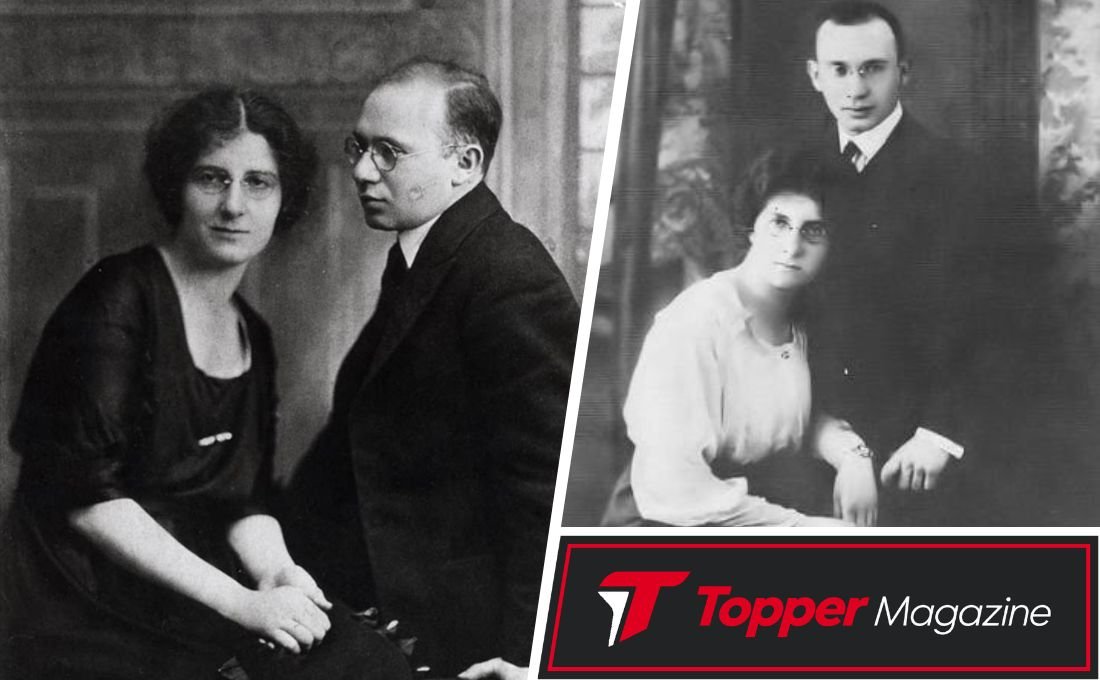
Morris Meyerson—also spelled Morris Myerson—is best remembered as the husband of Golda Meir, but his own story is rarely told in detail. Born in Chicago in 1893, Morris was a quiet, artistic sign painter and committed socialist who loved literature, poetry and music. He met the teenage Golda in Denver, married her in 1917, followed her dream of moving to Palestine, became the father of her two children and remained legally married to her until his death in 1951—even though their very different personalities and ambitions eventually pulled them apart.
Quick Bio of Morris Meyerson
| Detail | Information |
|---|---|
| Full Name | Morris Meyerson |
| Alternative Spelling | Morris Myerson |
| Born | December 17, 1893 |
| Birthplace | Chicago, Illinois, USA |
| Known For | Husband of Golda Meir |
| Early Profession | Sign painter |
| Political Outlook | Socialist |
| Interests | Literature, poetry, music and art |
| Wife | Golda Meir |
| Marriage Date | December 24, 1917 |
| Marriage Place | Milwaukee, Wisconsin |
| Immigration to Palestine | 1921 |
| Children | Menachem and Sarah |
| Separation | Effectively from around 1928 |
| Legal Divorce | Never divorced |
| Death | May 25, 1951 |
| Age at Death | 57 |
| Burial | Commonly recorded at Nahalat Yitzhak Cemetery |
| Did He Live to See Golda Become Prime Minister? | No |
Public records consistently give Morris’s birth date as December 17, 1893, and his death date as May 25, 1951. Golda did not become prime minister of Israel until 1969, almost eighteen years after Morris died.
Who Was Morris Meyerson?
Morris Meyerson was an American-born Jewish sign painter and socialist who became part of one of the most important political stories of the twentieth century almost by accident.
He was not a politician.
He was not a military leader.
He did not become a famous public speaker.
Instead, Morris was remembered by people around Golda as quiet and thoughtful.
The Smithsonian’s historical discussion of Golda describes him as a man deeply interested in poetry, art and music, while other biographies call him mild and intellectual.
That personality was very different from Golda’s.
She was energetic.
Political.
Argumentative.
Driven.
Morris seems to have preferred ideas, culture and a quieter life.
At first, those differences attracted them.
Later, they helped pull their marriage apart.
Morris Meyerson’s Early Life in Chicago
Morris was born in Chicago, Illinois, on December 17, 1893.
Detailed information about his childhood is much harder to find.
There is no famous autobiography.
No large collection of interviews.
And unlike Golda, he never became a public figure whose every early experience was carefully documented.
What does appear consistently is his creative and intellectual nature.
He worked as a sign painter, an occupation that required both practical skill and an artistic eye.
One biographical source also describes him as an aspiring engineer.
But it was in Denver, not Chicago, that Morris entered the history books.
That is where he met Golda.
How Did Morris Meyerson Meet Golda Meir?
Golda was still a teenager when she went to live with her older sister, Sheyna, in Denver, Colorado.
She had left her family home after clashing with her parents over education and marriage.
At Sheyna’s small home, visitors regularly gathered for long discussions about socialism, Zionism, trade unions, literature and women’s rights.
Those evenings changed Golda’s life.
They also introduced her to Morris.
Golda later remembered that she and Morris were opposites.
He was quiet and artistic.
She was outgoing and intensely political.
The Jewish Museum Milwaukee’s telling of her life says she felt Morris introduced her to “beautiful things” in culture and life.
CBS Colorado also reports that Morris took Golda to jazz concerts at Denver’s City Park.
It is easy to imagine why the relationship appealed to her.
Politics already filled Golda’s mind.
Morris offered poetry, music and another side of life.
Morris Was Older Than Golda
Morris was born in 1893.
Golda was born in 1898.
That made him around four and a half years older than her.
The Smithsonian notes that Golda dated Morris while she was living in Denver and that he eventually proposed. At first, she did not accept because she considered herself too young and planned to return to Milwaukee.
Their relationship continued despite the distance.
Golda eventually returned to her parents.
Her involvement with socialist Zionism became stronger.
And Morris remained part of her life.
Marriage would come several years after their first meeting.
But Golda had one very big condition.
Golda’s Condition Before Marriage
Golda wanted to move to Palestine.
Morris was far less enthusiastic.
According to UWM Libraries, she was deeply committed to Labor Zionism while Morris was a dedicated socialist.
The ideas overlapped.
But their dreams were not exactly the same.
Golda wanted to help build a Jewish homeland.
Morris was apparently much less emotionally attached to that goal.
Golda therefore made moving to Palestine a condition of their marriage.
He agreed.
That decision would change the rest of Morris’s life.
Morris Meyerson and Golda’s 1917 Wedding
Morris and Golda married on December 24, 1917, in Milwaukee.
A chronology maintained by Metropolitan State University of Denver says the wedding took place in Golda’s parents’ home.
It appears to have been modest rather than glamorous.
They were young people driven more by ideas than money.
Golda was 19.
Morris had just turned 24.
Their plan was to leave the United States and begin a new life in Palestine.
But world events interfered.
The First World War had disrupted passenger travel.
Their move had to wait.
For several more years, they remained in America.
Then, in 1921, they finally went.
Their 1921 Journey to Palestine
Golda and Morris left the United States in 1921.
The Washington Post’s historical account says their ship was called the Pocohontas and that the difficult journey took 52 days.
They arrived in July.
The couple then joined Kibbutz Merhavia.
The Knesset’s official biography of Golda confirms that she immigrated in 1921 with Morris and that the couple joined Merhavia.
For Golda, this was close to the life she had dreamed about.
For Morris, things were much harder.
Morris Did Not Love Kibbutz Life
Golda enjoyed the communal spirit of the kibbutz.
Morris did not.
TIME later described Morris as less enthusiastic about Zionism than his wife, while historical studies say the lack of privacy and difficult living conditions wore on him.
His health also caused problems.
Some accounts say he suffered recurring illnesses during the Merhavia period.
The couple eventually left the kibbutz after about two years.
This was one of their first major conflicts.
Golda loved communal pioneer life.
Morris wanted something different.
Their marriage had begun with compromise.
Now the compromise was starting to hurt.
From Merhavia to Tel Aviv and Jerusalem
After leaving the kibbutz, Morris and Golda spent time in Tel Aviv and later settled in Jerusalem.
The Knesset records that they left Merhavia in 1924.
The couple now had another goal.
Family.
Their first child arrived in 1924.
Their second followed in 1926.
For several years, Golda attempted to combine motherhood, marriage and her increasingly strong desire for public work.
It would prove extremely difficult.
Morris and Golda’s Son Menachem
Their son Menachem Meyerson was born in 1924.
He later became a professional cellist.
Biographical records say he studied at the Israel Conservatory and at the Manhattan School of Music.
That musical career is interesting when we remember Morris’s own love of culture and music.
Menachem lived a long life and died in 2014.
He was 90.
Their Daughter Sarah
Their daughter Sarah Meyerson was born in 1926.
She later became associated with Kibbutz Revivim in the Negev.
Sarah’s childhood also affected Golda’s public career.
In 1932, Golda took both children to the United States for an extended period partly so Sarah could receive expert treatment for a kidney illness.
Morris stayed behind.
By then, their marriage was already operating very differently from a conventional household.
Why Did Morris Meyerson and Golda Meir Separate?
There does not appear to have been one sudden argument that ended everything.
Instead, the marriage seems to have slowly broken under the weight of incompatible lives.
Golda wanted political work.
Travel.
Meetings.
Organizing.
Public responsibility.
Morris wanted more family stability and privacy.
By 1928, Golda’s appointment as secretary of the Women’s Labor Council required her to spend more time in Tel Aviv.
MSU Denver’s chronology says this move effectively marked the couple’s separation.
Morris remained in Jerusalem and visited on weekends.
They had not legally ended the marriage.
But they were no longer living as a normal married couple.
They Never Divorced
This is perhaps the most unusual part of their story.
Morris and Golda never divorced.
They remained legally husband and wife until Morris died in 1951.
Their emotional and everyday relationship had changed dramatically.
Yet they maintained family ties.
Historical accounts suggest Morris continued helping with the children during Golda’s frequent political responsibilities.
That makes the relationship difficult to describe with one simple word.
They were separated.
But not completely disconnected.
They were still family.
Did Golda Choose Politics Over Morris?
This question is often asked because of what happened later.
Golda eventually became one of Israel’s most important political leaders.
Morris largely disappeared from public history.
It is tempting to turn that into a simple story:
She chose politics.
He lost.
Reality was more complicated.
Golda herself struggled with guilt over combining motherhood and public work.
Later biographers describe the tension she felt between family obligations and the purposeful political life she believed she needed to pursue.
Morris’s needs were simply different.
Neither personality easily fit the other’s preferred life.
Morris Stayed Out of Politics
Morris never became a major political figure alongside Golda.
This is especially striking when we know what happened after his death.
Golda became Israel’s foreign minister.
Then, in 1969, prime minister.
But Morris never stood beside Prime Minister Golda Meir.
He had already been dead for nearly eighteen years.
That means it would be technically misleading to call Morris a “spouse of the Israeli prime minister” in the official sense.
Golda was already a widow when she took office.
He was the husband of the woman who later became prime minister.
Morris Meyerson’s Final Years
The public record becomes much quieter during Morris’s later life.
Golda’s political career continued rising.
Israel became independent in 1948.
Golda entered the new country’s government and became minister of labor in 1949.
Morris remained largely outside public attention.
He did not suddenly become a celebrity political spouse.
There are relatively few interviews or photographs documenting his later years.
That is one reason he became almost forgotten while his wife’s name grew more famous around the world.
When Did Morris Meyerson Die?
Morris died on May 25, 1951, at only 57 years old.
Sources agree on the date but differ somewhat on the exact location of his death.
Some biographical records say Jerusalem, while a Library of Congress-hosted historical study says he suffered a stroke and died while Golda was abroad, describing the death as occurring in her apartment in Tel Aviv.
Because of that conflict, the safest statement is simply that Morris died in Israel in May 1951.
Golda returned after receiving the news.
Despite years of separation, he was still her husband and the father of their children.
The historical study says she continued to feel genuine affection for him and recognized the sacrifices he had made by following her to Palestine.
Golda Meir Never Remarried
After Morris died, Golda did not marry again.
She continued her political rise.
In 1956, she changed her surname from Meyerson to the Hebrew Meir when she became foreign minister.
Then came the role that made her internationally famous.
In 1969, Golda became prime minister of Israel.
Morris had never lived to see it.
The young woman he met in Denver had become one of the world’s most recognizable political leaders.
Where Is Morris Meyerson Buried?
Morris is commonly recorded as buried at Nahalat Yitzhak Cemetery in Israel.
Golda was later buried separately on Mount Herzl after her death in 1978.
Their separate resting places almost seem symbolic.
Their lives began closely connected.
Later, their paths moved apart.
But their family history remained forever linked.
Morris Meyerson in Movies About Golda Meir
Because Morris was such an important part of Golda’s early life, he sometimes appears in dramatizations about her.
The television film A Woman Called Golda, starring Ingrid Bergman, includes Morris as part of the story of Golda’s youth, marriage, immigration and family life.
Modern audiences may know Golda mostly through her years as prime minister.
Morris belongs to the much earlier story.
Denver.
Young love.
Marriage.
The kibbutz.
Children.
And the choices Golda made before international fame arrived.
Interesting Facts About Morris Meyerson
Morris was born in Chicago in 1893 and worked as a sign painter. He loved poetry, art and music and was much quieter than Golda. They met in Denver while Golda was a teenager, married on Christmas Eve 1917 and moved to Palestine in 1921. Morris struggled with kibbutz life, and the couple eventually moved to Jerusalem. They had two children, Menachem and Sarah. Their lives began separating around 1928, but they never legally divorced. Morris died in May 1951 at 57, nearly eighteen years before Golda became prime minister.
Why Morris Meyerson Is Often Forgotten
History remembers winners, leaders and people who stand in front of cameras.
Morris did none of those things.
Golda became prime minister.
Her speeches were recorded.
Her decisions became the subject of books.
Her face appeared on newspaper front pages.
Morris remained a quiet man from an earlier stage of her life.
But without him, part of Golda’s personal story disappears.
He knew her before power.
Before government.
Before Israel even existed as a modern state.
He was there when she was simply Golda Mabovitch, a determined young woman arguing about politics in Denver.
That makes Morris historically interesting in his own right.
Final Thoughts
Morris Meyerson lived almost completely outside the spotlight that eventually surrounded his wife.
He was born in Chicago in 1893.
He became a sign painter and socialist who loved music, poetry and art.
Then he met an intense teenage girl named Golda in Denver.
They fell in love despite being remarkably different people.
Golda wanted Palestine.
Morris agreed to follow.
They married on December 24, 1917 and finally emigrated in 1921.
But the dream did not work equally well for both of them.
Golda loved the communal and political life.
Morris struggled with it.
They became parents to Menachem and Sarah, yet Golda’s growing public responsibilities eventually pulled the couple into separate homes.
By 1928, they were effectively separated.
Still, there was no divorce.
They remained connected until Morris died in May 1951.
Golda went on.
She became foreign minister.
She changed her surname to Meir.
Then she became prime minister in 1969.
Morris never saw that final transformation.
That is why his story feels strangely bittersweet.
He was one of the closest people to Golda before the world knew her.
Yet as her public importance grew, he faded into the background.
Today, Morris Meyerson deserves to be remembered not simply as Golda Meir’s forgotten husband, but as the artistic, quiet young socialist who shared the difficult first decades of the journey that eventually carried her into history.
FAQs About Morris Meyerson
Who was Morris Meyerson?
Morris Meyerson was an American sign painter and socialist best known as the husband of future Israeli prime minister Golda Meir.
When was Morris Meyerson born?
He was born on December 17, 1893, in Chicago, Illinois.
How did Morris Meyerson meet Golda Meir?
They met in Denver while Golda was living with her sister Sheyna. Morris was part of the intellectual and cultural world Golda discovered there.
What did Morris Meyerson do for a living?
He is commonly described as a sign painter. Some biographical accounts also call him an aspiring engineer.
Was Morris Meyerson a Zionist?
He was a committed socialist, but historical accounts describe him as much less enthusiastic about Zionism than Golda. Moving to Palestine was largely Golda’s dream.
When did Morris Meyerson marry Golda?
They married on December 24, 1917, in Milwaukee, Wisconsin.
When did Morris and Golda move to Palestine?
They immigrated in 1921 and joined Kibbutz Merhavia.
Why did Morris leave the kibbutz?
Historical accounts say he struggled with the hard lifestyle and lack of privacy, while recurring health problems also played a role.
How many children did Morris Meyerson have?
Morris and Golda had two children, Menachem and Sarah.
Did Morris Meyerson and Golda Meir divorce?
No. They lived increasingly separate lives but remained legally married until Morris’s death in 1951.
Why did Morris and Golda separate?
Their personalities and goals became increasingly different. Golda devoted herself to political and public work, while Morris preferred a quieter and more private family life. Their effective separation is commonly dated to around 1928.
When did Morris Meyerson die?
He died on May 25, 1951, aged 57.
What caused Morris Meyerson’s death?
A historical study hosted by the Library of Congress says Morris suffered a stroke shortly before his death.
Did Morris see Golda Meir become prime minister?
No. Morris died in 1951. Golda became prime minister in 1969.
Did Golda Meir marry again after Morris died?
No. She never remarried.
Where is Morris Meyerson buried?
He is commonly recorded as buried at Nahalat Yitzhak Cemetery.
For more detailed biographies, forgotten historical figures and fascinating lives connected to famous names, visit Topper Magazine.
