

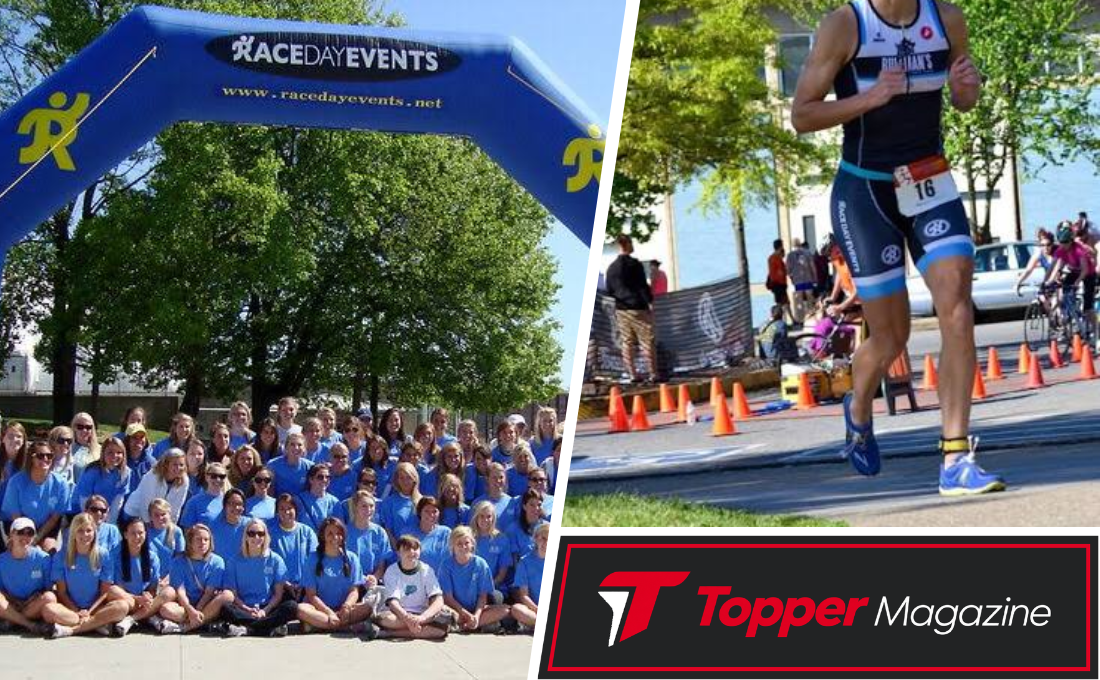
TriDeltathon may sound like an unusual word when you first see it, but behind the name is a long-running Knoxville sports tradition built around fitness, university life, volunteering, and charity. The historic event combined swimming, cycling, and running around the University of Tennessee campus, while the official TriDeltathon event page today reflects its newer life as TriDeltaRUN. What makes the story especially interesting is that the event was never simply about crossing a finish line—it also helped raise money for children and families who needed support.
For years, TriDeltathon gave both serious athletes and ordinary people a chance to experience a smaller, friendlier type of triathlon. Rather than starting with a difficult open-water swim, racers began in a swimming pool before moving onto a short bike course and then finishing with a run.
So where did TriDeltathon come from? Why did so many people remember it? And what happened to the swim-bike-run version of the event?
Here is the story.
What Is TriDeltathon?
TriDeltathon was a short-distance triathlon held in Knoxville, Tennessee, with strong connections to the University of Tennessee and Delta Delta Delta, commonly known as Tri Delta.
A triathlon normally asks an athlete to complete three sports one after another: swimming, cycling, and running.
TriDeltathon followed that same basic idea but kept the distances fairly short. That made it more approachable than many larger endurance races.
Historic race information listed a 400-meter indoor swim, followed by approximately a six-mile bicycle ride and a three-mile run.
The race started at the University of Tennessee Student Aquatic Center and continued through areas around the campus and Neyland Drive. The run also passed recognizable university sports locations.
That combination created a race that could still challenge experienced competitors without feeling impossible to someone trying multisport racing for the first time.
Why Is It Called TriDeltathon?
The name becomes much easier to understand once you break it apart.
“Tri Delta” refers to Delta Delta Delta, the sorority associated with the event.
“Thon” comes from the idea of an athletic challenge such as a marathon or triathlon.
Put the pieces together and you get TriDeltathon.
It is a clever name because it connects both the organization behind the event and the three-sport nature of the original race.
The sorority connection also explains why TriDeltathon developed such a strong student and community atmosphere.
Tri Delta volunteers supported the event, helping racers and creating energy along the course.
For many participants, that friendly atmosphere was part of what separated the race from a larger, more serious competition.
What Made TriDeltathon Different From a Normal Triathlon?
For many beginners, the scariest part of a triathlon is not cycling or running.
It is swimming.
Traditional triathlons often begin in open water such as a lake, river, or ocean. Athletes may have to deal with waves, cold temperatures, deep water, poor visibility, and many swimmers moving around them at once.
TriDeltathon used an indoor swimming pool.
That changed the experience considerably.
A swimming pool provides clear lanes, controlled water conditions, and easy access to the pool edge. Someone who can comfortably swim laps may therefore feel much more confident trying a pool triathlon than jumping directly into an open-water event.
This did not mean the swimming section was easy.
Racing 400 meters quickly can still be exhausting, especially when an athlete knows a bike ride and run are waiting immediately afterward.
But the pool format removed some of the uncertainty.
Historic organizers even promoted TriDeltathon as the oldest running pool triathlon in the country when advertising its planned 2020 edition.
The 400-Meter Swim
The first part of the classic TriDeltathon was a 400-meter indoor swim.
Four hundred meters may not sound like much when compared with long-distance swimming events. But try swimming quickly without stopping, then immediately getting onto a bicycle.
Suddenly, it feels different.
Athletes had to think about more than speed.
If someone used all their energy in the pool, they might struggle during the bike ride. Experienced racers therefore needed to control their effort and save enough strength for later.
Breathing also mattered.
A calm, controlled swimmer could leave the water ready for the next stage. Someone who pushed too hard might exit the pool already tired.
That balancing act is one of the things that makes triathlons interesting.
You are not simply trying to win one sport.
You are trying to manage three.
The Six-Mile Bike Ride
After completing the pool swim, racers moved into what triathletes call a transition.
This is where the swimmer becomes a cyclist.
Competitors need to get out of the water, reach their equipment, put on the necessary cycling gear, and begin the bike section.
Every second can matter.
The historic TriDeltathon bike course covered roughly six miles and travelled through the University of Tennessee campus area and Neyland Drive.
Six miles is much shorter than the cycling section found in many major triathlons.
That made the race fast.
There was little time to relax.
Competitors who wanted a strong result had to settle onto the bicycle quickly, find a comfortable rhythm, and maintain their speed without exhausting themselves before the run.
The Three-Mile Run
Then came the final challenge: running.
Historic race details described a three-mile campus run that passed major university sporting areas.
This may have sounded simple after only six miles on a bicycle.
But running after cycling can feel strange.
Your legs have spent several minutes moving in one pattern on the bike. Suddenly, they must switch to an entirely different movement.
Many first-time triathletes describe the first part of the run as feeling awkward or heavy.
This is why experienced athletes practise what are sometimes called “brick” workouts, where they cycle and then immediately run.
By the time TriDeltathon competitors reached the final stretch, however, the finish line was close.
That gave racers one last reason to push.
Why Beginners Could Enjoy the Race
TriDeltathon had several qualities that made it attractive to people curious about trying a triathlon.
First, the swim happened indoors.
Second, the distances were relatively short.
Third, competitors could race in relay divisions as well as individually.
That relay option was important because not everyone is good at all three sports.
Imagine three friends.
One loves swimming. Another spends weekends riding a bicycle. The third is a strong runner.
Instead of each person completing the entire event, they could work as a team.
That made the experience social as well as competitive.
It also meant someone could become involved without first becoming an expert swimmer, cyclist, and runner.
TriDeltathon Was About More Than Sport
The charity side of the event is one of the most important parts of the TriDeltathon story.
Historic versions of the race supported charitable causes connected with children in East Tennessee.
The modern TriDeltaRUN continues that tradition.
According to the 2026 race information, proceeds support East Tennessee Children’s Hospital and Camp Eagles Nest, a summer camp serving children with cancer and rare blood disorders.
That gives the event a second purpose.
Participants may come because they enjoy running or racing, but their entry also helps support a community cause.
This combination of sport and fundraising is one reason events like TriDeltathon can survive in people’s memories long after a particular race format changes.
The University of Tennessee Connection
The University of Tennessee setting was another major part of the race’s identity.
The event was not taking place on an anonymous course far away from campus life.
Participants were moving through places connected with the university.
Students could race.
Sorority members could volunteer.
Local athletes could visit campus.
Friends and family members could watch.
That created something closer to a community event than a purely professional competition.
It also made the course memorable.
Rather than racing through identical-looking streets, participants were surrounded by university buildings, athletic facilities, and familiar Knoxville landmarks.
What Happened in 2020?
The planned 2020 TriDeltathon was supposed to take place on April 19.
Organizers described it as the event’s 36th year.
Then COVID-19 disrupted universities, sports, travel, and public gatherings around the world.
The University of Tennessee moved academic activity online for the remainder of that school year, and organizers announced that the 2020 TriDeltathon would be cancelled.
Registered participants were offered several choices, including transferring their registration, receiving credit toward another event, requesting a refund, or allowing their entry fee to remain as a donation to the charity.
It was an unusual ending to what had been a long-running format.
But it was not the end of the charity racing tradition.
From TriDeltathon to TriDeltaRUN
One of the most important things for people searching the term TriDeltathon today is understanding that the current event is different.
The familiar swim-bike-run version is no longer the active race format listed by organizers.
Instead, the tradition has continued through TriDeltaRUN, a 5K running event.
For 2026, Race Day Events listed TriDeltaRUN for April 19 in Knoxville.
The race returned to UT Gardens, with much of the 5K course running along the Third Creek Greenway. Organizers described 2026 as the fifth year of the 5K event.
That means someone finding an old TriDeltathon page online should be careful.
The historical information may describe swimming, cycling, and running, while the current event is a running race.
What Was the 2026 TriDeltaRUN Like?
The 2026 event was scheduled to start at 10:00 a.m. EDT on April 19.
Its venue was UT Gardens on the University of Tennessee Agriculture Campus in Knoxville.
Race information advertised overall and age-group awards, race-logo shirts, snacks, and post-race refreshments.
Student discounts were also available.
Most importantly, the charity connection remained.
Proceeds continued to benefit East Tennessee Children’s Hospital and Camp Eagles Nest.
So although the athletic challenge changed, the community mission survived.
That may be the strongest connection between the old TriDeltathon and today’s TriDeltaRUN.
TriDeltathon vs. TriDeltaRUN
It is easy to confuse the two names, especially when old race pages still appear online.
The simplest explanation is this.
TriDeltathon was the historic multisport event.
Athletes swam, cycled, and ran.
TriDeltaRUN is the newer 5K format.
Participants run rather than complete three different sports.
Both are connected through Tri Delta, Knoxville, the University of Tennessee community, Race Day Events, and charitable fundraising.
So TriDeltaRUN can be viewed as carrying forward the spirit of TriDeltathon, even though the actual competition is different.
Why TriDeltathon Still Gets Searched Today
Why would people still search for an event whose original format has changed?
There are several reasons.
Former participants may be looking for race results or photographs.
University alumni may remember watching or volunteering.
Athletes may discover an old event listing and wonder whether the triathlon still exists.
Others may simply see the strange name “TriDeltathon” online and become curious about what it means.
Its unusual name certainly helps.
Once you hear “TriDeltathon,” you naturally want to know what it is.
That curiosity keeps the old race visible online.
What TriDeltathon Teaches About Community Events
The most interesting part of this story may not be the race distances at all.
TriDeltathon shows how a relatively small university event can develop an identity lasting for decades.
It did not need to be an enormous international competition.
It needed participants.
It needed volunteers.
It needed a purpose.
And it needed a community willing to keep showing up.
Even when the original triathlon format disappeared, the people behind it were able to preserve part of its mission through a simpler 5K event.
That is often how local traditions survive.
They change.
Could Someone New Have Completed the Original Race?
For a healthy person comfortable with basic exercise and swimming, the original TriDeltathon distances were much more approachable than those of an Ironman or other long-distance triathlon.
That did not mean someone should simply arrive without preparation.
The swimming section required confidence in the pool.
Cyclists needed control of their bikes.
Runners needed enough endurance to finish after already swimming and cycling.
Even the transitions required practice.
Still, the relatively compact distances made TriDeltathon a useful introduction to multisport racing.
For many people, simply finishing all three sections would have felt like a major achievement.
The Role of Volunteers
Athletes usually receive most of the attention at a race.
But volunteers can be just as important.
Someone must help participants understand where to go.
Someone must support race stations.
Someone must encourage runners.
Someone must assist with organization before competitors ever reach the starting line.
Tri Delta members were a visible part of that support.
Their involvement strengthened the link between the race and the university community.
It also reminded competitors that the event had a fundraising mission beyond finishing times and medals.
Why Short Races Can Still Be Hard
Looking only at the numbers can make the old TriDeltathon seem easy.
A 400-meter swim.
Six miles of cycling.
Three miles of running.
But short races can be intense.
In a very long event, athletes often move at a controlled pace because they need to save energy for hours.
In a short triathlon, racers may push much harder.
There is less distance, but there is also less time to recover from mistakes.
A slow transition matters.
Starting too quickly matters.
Using too much energy in the pool matters.
This is what made a compact event like TriDeltathon both beginner-friendly and competitive at the same time.
Final Thoughts
TriDeltathon is much more than an unusual internet search term. It represents a long Knoxville racing tradition connected with the University of Tennessee, Delta Delta Delta, local athletes, volunteers, and children’s charities.
The historic event stood out because of its accessible formula: an indoor pool swim, a short bicycle course, and a campus run. It gave beginners a possible first step into triathlon while still providing experienced racers with a fast challenge.
Today, the original swim-bike-run format has given way to TriDeltaRUN, but the most important idea remains alive.
People come together, get active, enjoy their community, and use the event to help others.
That may be the real reason TriDeltathon continues to be remembered.
Frequently Asked Questions About TriDeltathon
What is TriDeltathon?
TriDeltathon was a short-distance pool triathlon associated with the University of Tennessee in Knoxville and Delta Delta Delta sorority. It combined swimming, cycling, and running while also raising money for charity.
What were the TriDeltathon distances?
Historic event information listed a 400-meter indoor swim, a roughly six-mile bicycle ride, and a three-mile run.
Where was TriDeltathon held?
The traditional event was based around the University of Tennessee campus in Knoxville, Tennessee, with the swimming portion taking place at the university’s aquatic facility.
Was TriDeltathon good for beginners?
Its pool swim and relatively short distances made it more approachable than many larger triathlons. However, participants still needed suitable preparation for swimming, cycling, running, and transitions.
Is TriDeltathon still held today?
The traditional swim-bike-run race is not currently listed in its historic format. The modern continuation is TriDeltaRUN, a 5K event in Knoxville.
What is TriDeltaRUN?
TriDeltaRUN is a 5K organized with Delta Delta Delta sorority and Race Day Events. In 2026, it was held at UT Gardens with much of the route using Third Creek Greenway.
Who benefits from the event?
The 2026 race information states that proceeds support East Tennessee Children’s Hospital and Camp Eagles Nest, which serves children with cancer and rare blood disorders.
Why was the 2020 TriDeltathon cancelled?
The 2020 event was cancelled after the University of Tennessee moved to online operations during the COVID-19 disruption.
Why is TriDeltathon unusual?
Its indoor pool swim made it different from triathlons that begin in lakes, rivers, or oceans. The combination of university culture, a compact course, sorority volunteers, and charity fundraising also gave the event its own identity.
What is the biggest difference between TriDeltathon and TriDeltaRUN?
TriDeltathon was a three-sport race involving swimming, cycling, and running. TriDeltaRUN is a standalone 5K running event.
For more detailed celebrity-family biographies, hidden life stories, and interesting profiles behind famous names, visit Topper Magazine.
